



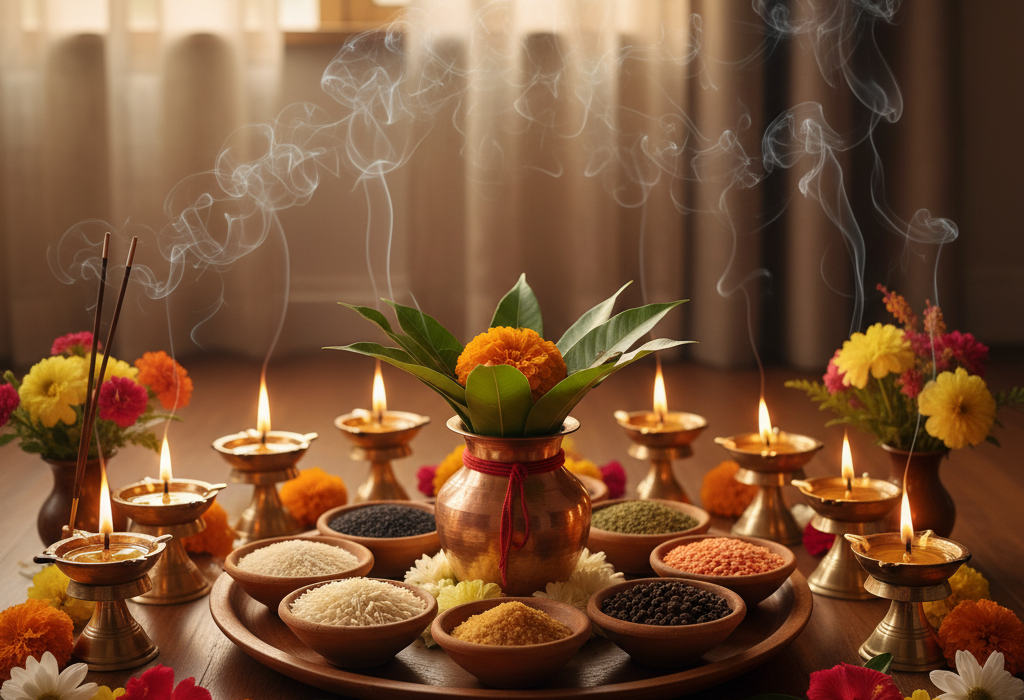
Planet Pooja Guide: Ease Bad Luck and Find Peace in 2026
Pooja recommendations for planets are personalized Vedic rituals aligned to your birth chart to balance Navagraha influences. At World Astro in Brampton (33 Seachart Pl), we match specific poojas, mantras, and donations to your planetary periods so you reduce obstacles and invite steadier progress in career, relationships, health, and finance.
By Nirwair (World Astro) • Last updated: 2026-06-07
Quick Summary
Planetary pooja guidance links your unique birth chart to targeted rituals for the nine Vedic planets. The process starts with chart analysis, then selects a core pooja, mantra counts, offerings, and a 21–40 day routine. Done correctly, this harmonizes tough periods, strengthens helpful grahas, and supports calmer results.
This complete guide is written for individuals and families working with World Astro across Canada and the U.S. You’ll learn what Navagraha pooja is, why it matters, how it works, and which remedies suit common scenarios. We include checklists, a per-planet table, and local tips for Brampton clients.
- What planetary poojas are and how they help
- When to pick single-graha vs Navagraha remedies
- Per-planet offerings, mantras, days, and do’s/don’ts
- How World Astro structures a 21–40 day plan
- Local logistics around Brampton and Peel Region
What Is Planetary Pooja?
Planetary pooja is a focused Vedic ritual to balance a specific graha (planet) or the full Navagraha set. It combines mantra counts (often 108 or 1008), offerings, donations, and a set duration (commonly 21–40 days) chosen from your birth chart to stabilize life areas under that planet’s control.
In practical terms, a planetary pooja plan translates your chart’s promises into ritual action. We read dasha/antardasha, house strengths, and transits, then advise a precise routine: day of the week, mantra count, food offering, and charitable giving. Clients like the clarity of “do this for 27 days” with simple, repeatable steps.
- Scope: Single-graha (e.g., Shani pooja) or the combined Navagraha pooja when multiple influences overlap.
- Structure: Sankalpa (vow), purification, mantra japa, light/food offering, and donation aligned to the planet’s nature.
- Typical counts: 108 repetitions per session, or multiples like 1,008 for intensified sadhana.
- Duration: 21, 27, or 40 days are widely used cycles tied to lunar patterns and habit formation.
At World Astro, we embed these steps into your astrology consultation plan, so the ritual aligns with muhurat timing, home routine, and your capacity to follow through.
Why Planetary Pooja Matters in 2026
Planetary pooja matters because it channels discipline into periods when dasha and transits intensify stress. A clear, 15–30 minute daily ritual stabilizes mindset, reduces reactivity, and signals gratitude—crucial during Saturn return phases, nodal shifts, or strained Mercury cycles affecting work and communication.
Here’s the thing: tough periods magnify small decisions. A grounded daily practice lowers friction and keeps you consistent. We’ve found that clients who complete a 27–40 day plan report fewer disruptions and steadier focus across work, home, and health. Ritual creates rhythm, and rhythm supports results.
- Predictable routine: 108 mantras + light ghee lamp daily = calm baseline regardless of headlines.
- Constructive outlet: When Mars is hot or Rahu is erratic, the ritual becomes a pressure release.
- Reinforced intention: Sankalpa refocuses the mind on what you’re building—relationship trust, financial steadiness, or health recovery.
We pair pooja with good muhurat choices and, when relevant, lucky gemstone recommendations to strengthen timing and outcomes.
How Planetary Pooja Works with World Astro
We start with your birth chart, identify the active dasha and problem areas, then design a 21–40 day routine with mantras, offerings, and donations. We set a weekly check-in, align with muhurat windows, and adjust intensity (108–1,008 counts) based on your schedule and sensitivity.
Our process is simple but exacting. We combine classic Parashara rules with lived experience from 15+ years of client work. The goal: a plan you can actually do. We document steps in your report and offer a short call to confirm setup before day one.
- Consult: Share goals in a guided consultation or via email horoscope.
- Diagnose: Read dasha, antardasha, transits; confirm houses affected (career, marriage, assets, health).
- Prescribe: Choose single-graha or Navagraha pooja; set day, mantra count, and donation.
- Align timing: Pick a start date using our muhurat playbook.
- Perform: 15–30 minutes daily; record 21–40 sessions; offer food to need or temple on key days.
- Review: Check-in weekly; adjust intensity or add complementary remedies (yantra, Rudraksha).
We also advise basic Vaastu tweaks from our Vaastu consultation framework so the home supports your practice (clean northeast, stable lamp placement, clutter-free altar).
Types of Remedial Poojas: Single-Graha vs Navagraha
Choose single-graha pooja when one planet clearly drives the issue (e.g., Shani for delays). Opt for Navagraha when multiple grahas interact or the problem spans work, relationships, and mood. Blend with mantras, donations, and weekly fasts to create a rounded, sustainable routine.
Single-Graha Examples
- Shani (Saturn): For chronic delays or heavy responsibilities; light sesame lamp on Saturdays; donate black clothing or sesame.
- Mangal (Mars): For conflict, injuries, impulsivity; offer red flowers on Tuesdays; donate red lentils.
- Budha (Mercury): For scattered mind and communication breakdowns; offer green grams on Wednesdays; donate study materials.
Navagraha Use-Cases
- Multi-domain stress: Work + relationship + sleep disruption suggests overlapping grahas.
- Nodal turbulence: Rahu–Ketu axis causing anxiety, restlessness, or sudden turns.
- House clusters: Three or more planets impacting money houses (2, 8, 11) or family axis (1, 7).
Not sure which path fits? Our pooja recommendation session clarifies the right scope in one conversation.
Per-Planet Pooja Recommendations (Navagraha)
Use the table below as a quick-reference for per-planet remedies. Your final plan should be validated against your birth chart, dasha, and transits. Treat this as a starting framework, then personalize with a World Astro consultation for best results.
| Planet (Graha) | Typical Day | Common Offerings | Core Mantra Count | Pooja Focus |
|---|---|---|---|---|
| Surya (Sun) | Sunday | Red flowers, wheat, jaggery | 108–1,008 | Confidence, father/authority, vitality |
| Chandra (Moon) | Monday | White rice, milk, white flowers | 108–1,008 | Emotions, mother, sleep, fluids |
| Mangal (Mars) | Tuesday | Red lentils, betel leaves | 108–1,008 | Drive, siblings, property, injuries |
| Budha (Mercury) | Wednesday | Green gram, tulsi, fresh fruits | 108–1,008 | Speech, study, trade, nerves |
| Guru (Jupiter) | Thursday | Chickpeas, turmeric, yellow sweets | 108–1,008 | Wisdom, counsel, children, expansion |
| Shukra (Venus) | Friday | White sweets, perfume, rice | 108–1,008 | Love, comfort, arts, vehicles |
| Shani (Saturn) | Saturday | Sesame oil, black sesame, iron | 108–1,008 | Work, delays, discipline, justice |
| Rahu | Saturday (or Wed.) | Blue/black cloth, sesame | 108–1,008 | Ambition, sudden gains, illusions |
| Ketu | Tuesday (or Thu.) | Brown cloth, kusa grass | 108–1,008 | Detachment, insight, accidents |
For food offerings, many clients share simple prasadam at home. If you prefer sweets, traditional options like besan or ghee-based treats are common; see a community example of making ghee ladoo at home to inspire your preparation approach.
Best Practices and Checklists
Keep pooja simple, consistent, and safe. Choose a fixed 15–30 minute window, track 21–40 sessions, and set two weekly donations or service acts. Maintain a clean altar, ventilate when lighting lamps, and align start dates with favorable muhurat for smoother momentum.
Daily Setup Checklist
- Fix your 15–30 minute slot; set two alarms (start + wrap-up).
- Lay out mantra beads, lamp, incense, water, and offerings the night before.
- Record 108 counts; log each day for 21, 27, or 40 days.
- End with a small act of service (donation or kindness) twice weekly.
Safety & Home Energy
- Ventilate during lamp/incense; never leave open flames unattended.
- Keep the northeast area clean; avoid clutter near the altar.
- Use a stable, non-flammable base for diyas; place water nearby.
Local considerations for Brampton
- Temple participation: If you plan a group Navagraha archana, the Bhavani Shankar Mandir & Cultural Centre is a known hub—call ahead to confirm priest availability and ritual sequence.
- Seasonal rhythm: Winter evenings get dark early; schedule your 15–30 minute routine before commute fatigue sets in.
- Transit planning: If bringing offerings to a temple or family, aim around the Highway 50 – Zum Queen Station Stop WB corridor to avoid last-minute delays on ritual days.
Clients often pair this with our Vaastu setup tips to keep the altar energized and distraction-free.
Tools and Resources (Mantras, Altars, Food, and Service)
You need four basics: a reliable mantra source, a clean altar, a simple offering, and a service path (donation or volunteering). Add optional supports—rudraksha, yantras, or a gemstone—only after your core routine is steady for 21 days.
- Mantra resources: We provide audio pace guidance and counts in your report; 108 is the baseline, 216 or 324 for deeper focus.
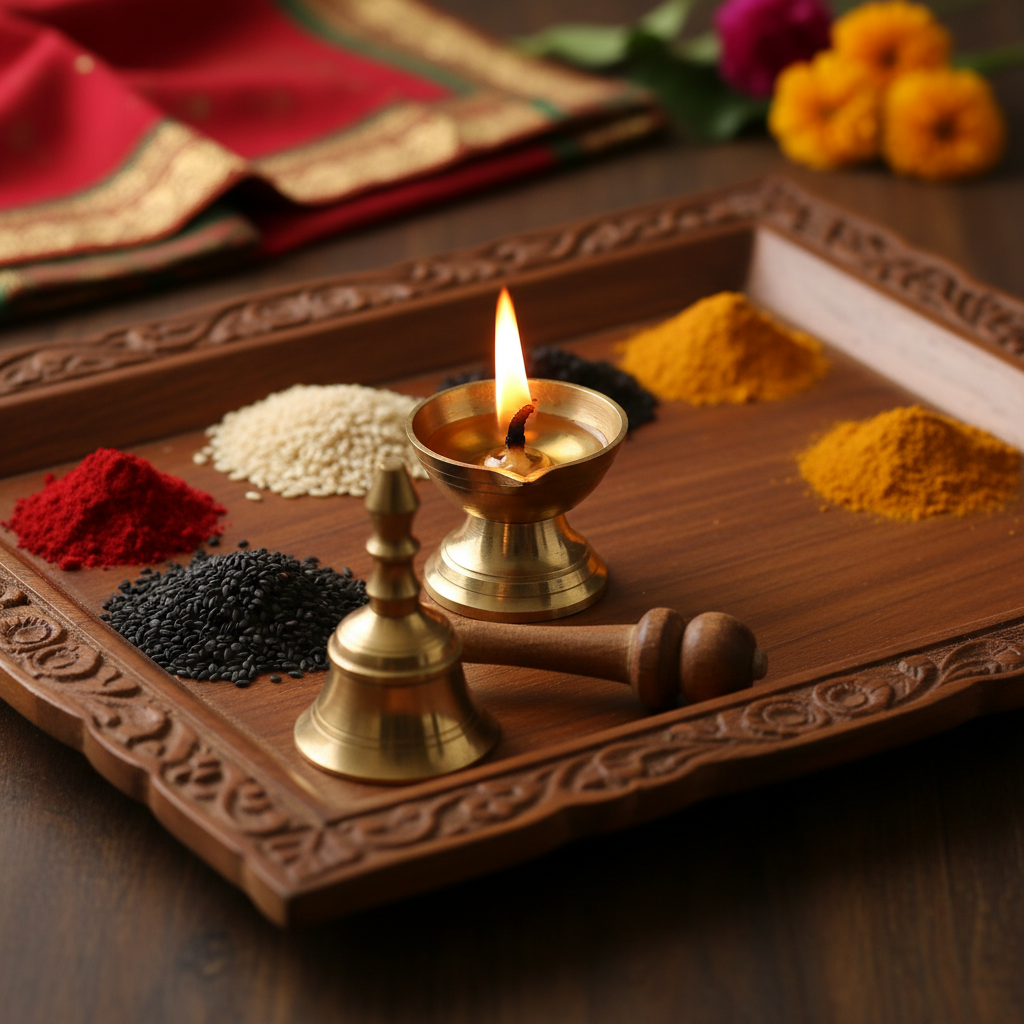
- Altar kit: Brass/copper lamp, water cup, incense, bell, and a wipeable tray; keep it consistent.
- Food offering: Fresh fruit, simple sweets, or seasonal items; homemade options like paneer snacks can serve as family prasadam after ritual.
- Service track: Donate items that match the planet’s nature (e.g., sesame for Shani; study supplies for Budha).
When clients ask, “Do I need a big temple ceremony?” our answer is honest: start small at home. If the chart suggests it, schedule a temple step later. We can coordinate the sequence during your talk-to-astrologer session.
How to Sequence Remedies (Pooja, Mantra, Fasting, Donation)
Start with daily mantra + lamp for 21 days. Add a light weekly fast on the planet’s day and a targeted donation twice weekly. After consistency is proven, consider a one-time temple archana or homa. Keep one change per week to avoid burnout.
- Week 1: 108 mantras + lamp daily; log progress.
- Week 2: Add planet-day fast (e.g., Monday for Moon) and a small donation.
- Week 3: Extend to 216 counts on two days; add a second service act.
- Week 4: If advised, schedule a temple archana; maintain daily baseline.
We keep the routine realistic. Many clients find 15–25 minutes sustainable, with minor increases (216 or 324 counts) on weekends when energy is higher.
Case Insights from World Astro Clients
Real-world results follow consistent routines. Across 15+ years, we’ve seen 27–40 day practices correlate with calmer decision-making, fewer heated arguments in Mars periods, and steadier sleep in Moon-stressed charts. The ritual anchors behavior while timing opens windows for progress.
- Brampton entrepreneur (Shani period): 27 days of sesame lamp + 108 mantras; donated food twice weekly. Reported fewer supply hiccups and better patience with vendors by week 3.
- Mississauga couple (Rahu–Ketu tension): 40-day Navagraha lamp + shared prasadam on Saturdays. Arguments reduced as they built a shared routine and weekly walk after pooja.
- Toronto student (Budha focus): 21 days, 108–216 counts on study days; donated notebooks mid-cycle. Felt clearer in presentations and cut filler words.
We formalize next steps with a brief written summary so you’re never guessing what to do on day 1—or day 40.

Brampton and Peel Region: How We Localize Your Plan
For Brampton clients in the Regional Municipality of Peel, we tailor start times to commuting windows, daylight, and temple access. We also suggest weather-appropriate lamp safety, winter scheduling, and donation logistics so your 21–40 day plan stays practical all season.
Plans that work are plans you can keep. In winter, we often move the lamp to early morning to avoid evening fatigue. In summer, we keep it post-sunset to align with family dinners. When a temple visit fits, we help you call ahead to confirm sequence and items.
- Timing: Align ritual with your real commute; avoid last-minute rush on fast days.
- Safety: Use oil trays and keep windows slightly open for ventilation.
- Access: Batch donations (e.g., sesame, notebooks) every 7 or 14 days for efficiency.
Frequently Asked Questions
These concise answers address the questions we hear most about planetary pooja. Use them to get started confidently, then book a focused session to personalize the process for your chart and schedule.
How do I know if I need a single-planet pooja or Navagraha?
If one planet clearly maps to the problem—like Shani for chronic delays—start single-graha. If stress hits several areas at once, Navagraha offers a clean reset. We confirm by reading your dasha, house strengths, and current transits.
How many mantras should I chant daily?
Begin with 108 repetitions. If your schedule allows, scale to 216 or 324 on one or two days per week. For short, intense cycles, some plans use 1,008 on a key day—only if you’re rested and can maintain good form.
Do I need to visit a temple for pooja to work?
Home-based routines are effective when done consistently. Temple participation can add depth once your home habit is steady. We’ll advise if and when a temple archana or homa suits your chart and timing.
What should I donate for different planets?
Match the gift to the planet’s nature—sesame or iron for Shani, study materials for Budha, turmeric or chickpeas for Guru, white foods or milk for Chandra. We tailor amounts and timing to your plan.
How long before I notice changes?
Most clients feel calmer by week two as routine takes hold. Tangible shifts often align with favorable transit windows or the end of a 27–40 day cycle. Consistency matters more than intensity on any single day.
Conclusion and Next Steps
The best planetary pooja plan is specific, simple, and sustainable. Start with 108 mantras daily, add a weekly fast and two acts of service, and align the start date with a solid muhurat. Personalize details from your chart for steady, real-world results.
- Key Takeaways
- Use single-graha when one planet dominates; Navagraha for multi-domain stress.
- 108 is a solid daily anchor; 21–40 days builds real momentum.
- Donations and small service acts amplify the ritual’s intent.
- Align with muhurat and basic Vaastu to smooth daily follow-through.
- Action Steps
- Book a consultation with World Astro to map your plan.
- Set your 21–40 day window and gather altar essentials today.
- Use our guidance to schedule a temple step only after the home routine stabilizes.
Soft CTA: Want a clear, day-by-day sequence tailored to your chart? Start with a 20-minute talk-to-astrologer session and get your personalized planetary pooja checklist.
Additional Guidance You Can Use
For timing support, review our advice on avoiding muhurat mistakes. If your plan includes supportive items, see our practical gemstone selection guide. Prefer written instructions? Our email horoscope format comes with step-by-step pooja pages so the whole family can follow along.