




How to Read Horoscope Yourself: Get Clear Answers Now
Reading your own horoscope is the step-by-step practice of interpreting your birth chart to understand timing, tendencies, and themes in life. It starts with accurate birth data, then moves through ascendant, planets, houses, aspects, and timing methods. In Brampton, you can use World Astro’s free tools to begin confidently today.
By Nirwair — World Astro
Last updated: July 5, 2026
Summary
You’ll learn a simple, reliable way to read your own horoscope using World Astro’s free tools. We cover prerequisites, a 7-step reading process, a Western vs Vedic comparison, examples, troubleshooting, and Brampton-specific tips—plus when to escalate to a professional reading for clarity or major decisions.
Here’s what you’ll get from this guide:
- Clear definitions and a repeatable 7-step method
- Quick checks for birth time accuracy and house focus (1–12)
- A Western vs Vedic comparison table with practical implications
- Mini case studies from real scenarios we see at World Astro
- Local notes for Brampton readers and a soft path to expert help
Introduction
A horoscope (natal chart) is a map of the sky at your birth showing 9 Vedic planets across 12 houses and 27 lunar mansions. Reading it reveals personality patterns and timing windows. With accurate data and a checklist, you can self-read reliably before consulting a professional.
At World Astro in Brampton, we teach self-reading to help you prepare smarter questions and decisions. Our clients use self-reads to frame priorities, then confirm insights via a focused session. For deeper dives, see our talk to astrologer tips and our primer on asking an astrology question.
Two numbers guide everything: 12 houses structure life areas, and the ascendant changes roughly every 2 hours, so birth time accuracy matters. Keep a notepad handy to track repeating themes across houses, signs, and planetary rulers.
Before You Start (Prerequisites)
Collect your exact birth date, place, and time (to the minute if possible). Choose the system you’ll use (this guide focuses on Vedic/Parashari). Then prepare a quiet workspace, a notebook, and World Astro’s chart tools so you can move through the steps without distraction.
What you need on your desk
- Birth details: date (YYYY-MM-DD), time (HH:MM), birthplace (city/country)
- World Astro free tools: Use our email option described in get horoscope by email for easy reference
- Notebook and 2 colors: One color for strengths, one for cautions
- Mindset: Treat this like a structured study, not a one-off guess
Why exact birth time matters
- Ascendant sensitivity: The ascendant shifts about 1 degree every 4 minutes; even a 10-minute error can change house emphasis.
- House cusps: House boundaries define life areas (1–12). Small timing errors ripple into career (10), partnerships (7), or home (4).
- Remedies and timing: Dashas (planetary periods) and transits map timing; a wrong ascendant can skew your planning months ahead.
Local considerations for Brampton
- If you’re near Bhavani Shankar Mandir, set aside a quiet hour post-visit for reflection before you interpret your chart.
- During winter, plan reading windows in daylight; mood and light quality affect focus, especially for beginners.
- For wellness routines that support spiritual study, consider coordinating with local services near Highway 50 – Zum Queen Station Stop WB and check community listings like Brampton service listings.
How to Read Your Horoscope Yourself: Step-by-Step
Follow this 7-step process: confirm data, cast a Vedic chart, read ascendant and lords, scan planets in signs/houses, note aspects and yogas, check dashas/transits, then summarize actions. This keeps you objective and prevents cherry-picking favorable indications.
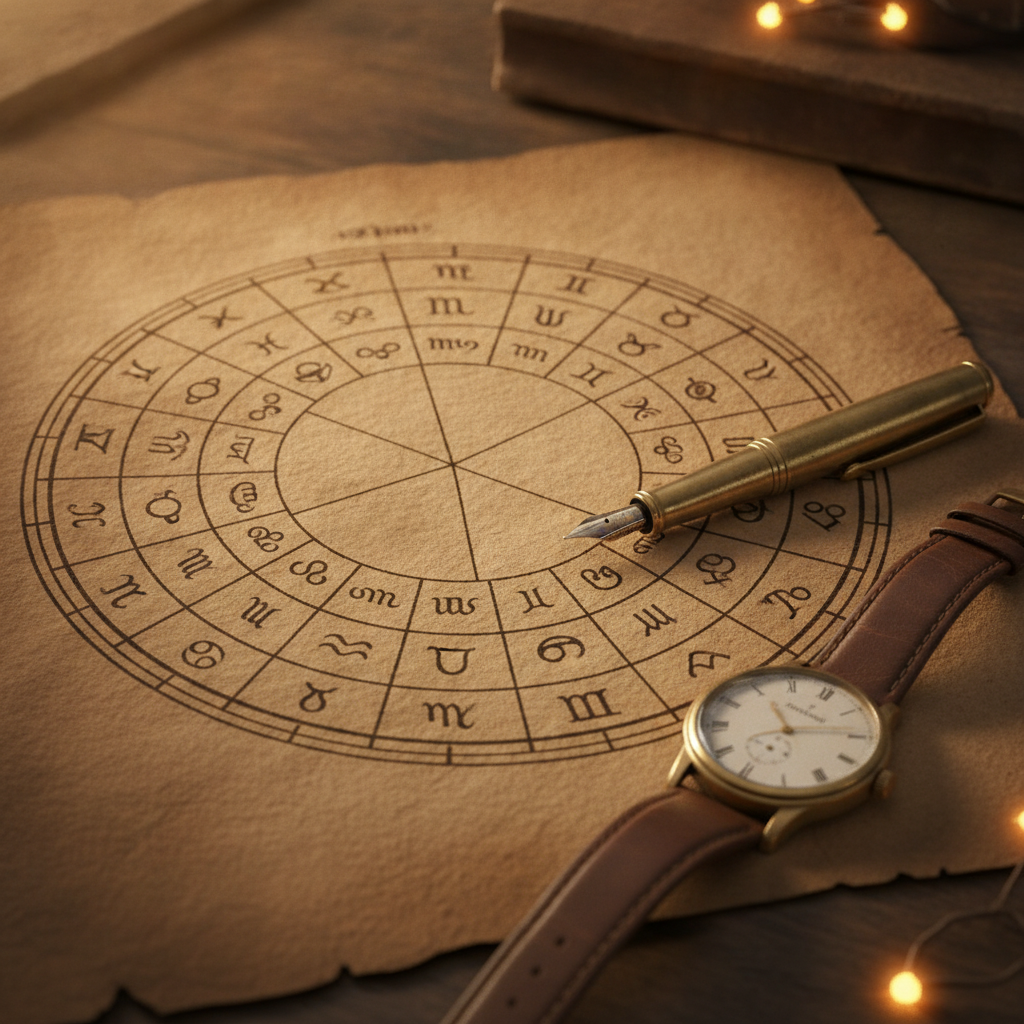
Step 1 — Confirm your data
- Time check: Use the time on your birth document; ask family to corroborate within a 5-minute window.
- Place coordinates: City is enough; modern software adjusts time zones and daylight saving automatically.
- System choice: This guide uses Vedic (sidereal) with Lahiri ayanamsha, common in Parashari practice.
World Astro clients often email details first via our email horoscope option to keep records tidy before a call.
Step 2 — Cast your chart
- Generate a chart: Use a Vedic chart generator; save the Rasi (D1) chart first.
- Verify ascendant: Note ascendant sign and degree (e.g., Virgo 12°). This anchors house rulerships.
- Skim navamsa (D9): For relationship themes and planet strength confirmation.
If you prefer a guided start, our long-form primer how to read a birth chart walks through chart snapshots and examples.
Step 3 — Read the ascendant and its lord
- Ascendant sign traits: Sets core style; note modality (cardinal/fixed/dual) and element (fire/earth/air/water).
- Ascendant lord: Find where it sits (house/sign). House shows life focus; sign shows method.
- Condition: Dignity (own, exalted, debilitated), combustion, retrograde, and aspects modify outcomes.
Example: Libra rising with Venus in the 10th highlights public-facing work; if Venus is dignified, create visibility goals for the next 90 days.
Step 4 — Planets in houses and signs
- Personal planets: Sun (identity), Moon (mind), Mars (drive), Mercury (speech), Venus (relating).
- Social/outer: Jupiter (growth), Saturn (discipline), Rahu/Ketu (karmic axes).
- Method: For each planet, note sign, house, and ruler. Write a one-line meaning per placement.
Tip: Use two colors—green for supportive placements, amber for caution signals—so you don’t over-emphasize one narrative.
Step 5 — Aspects and yogas
- Classical aspects: Note special drishtis (e.g., Saturn’s 3rd/7th/10th). Oppositions across the Rahu–Ketu axis are pivotal.
- Core yogas: Raja/Dhana yogas (success/wealth), and Arishta yogas (stress). Record only those clearly formed.
- Balance: One strong yoga does not cancel all challenges; weigh the whole chart.
We’ve found that a chart with 2–3 supportive yogas and steady Saturn/Jupiter placements typically sustains slow, compounding progress.
Step 6 — Timing: dashas and transits
- Dashas: Identify your current Mahadasha and Antardasha. Note the houses ruled by the dasha lord.
- Transits: Track Saturn and Jupiter yearly; they shape 12–24 month priorities.
- Short windows: New/Full Moons near key points can spark 2–4 week themes.
For professionals in Brampton planning career moves, we often align dasha windows with quarterly goals—see our career horoscope guide.
Step 7 — Summarize actions
- Three priorities: Pick one career, one relationship, and one health/home action.
- Timebox: Assign a 30–90 day window matched to your dasha/transit picture.
- Accountability: Share your summary with a trusted friend or book a short consult.
When your notes exceed one page, or contradictory signals pile up, it’s time for a quick check-in—our clients use the talk to astrologer checklist for that handoff.
Western vs Vedic: What Changes and Why It Matters
Western astrology uses a tropical zodiac; Vedic uses a sidereal zodiac offset by the ayanamsha (about 23–24° today). This often shifts planets into prior signs and changes house rulerships, which can alter career and relationship interpretations significantly.
| Topic | Western (Tropical) | Vedic (Sidereal) | Practical Effect |
|---|---|---|---|
| Zodiac basis | Seasonal equinox | Fixed stars (ayanamsha) | Planets may shift back ~1 sign |
| House emphasis | Often equal/Placidus | Whole-sign common in Vedic | Rulership chains become cleaner |
| Timing | Progressions/transits | Vimshottari dashas + transits | Distinct multi-year themes |
| Remedies | Psychological framing | Mantra, yantra, gemstone | Actionable daily practices |
If you use both, anchor on one system per question. Mixing methods mid-interpretation is the fastest way to confuse yourself.
Troubleshooting: 9 Things Beginners Get Wrong
Most mistakes come from fuzzy birth times, skipping the ascendant lord, or chasing every yoga. Fix data first, then use a strict reading order. If signals conflict, prioritize house rulerships and current dasha over minor aspects.
- Uncertain birth time: Test adjacent ascendants; see which biography fits better.
- Cherry-picking positives: Balance every plus with a constraint you’ll manage.
- Ignoring house rulers: Track ruler chains (e.g., 10th ruler in 2nd).
- Overweighting outer bodies: In Vedic, stick to the 9 classical planets first.
- Missing combustion/retrograde: These modify strength; note them plainly.
- Forgetting Nakshatras: The 27 lunar mansions add nuance for Moon/ascendant.
- Reading without a question: Define a 1-sentence aim before you start.
- No summary: End with three actions and dates; otherwise, insights fade.
- Not asking for help: When in doubt, get a second set of eyes from a pro.
When relationships are the core concern, align your self-reading with structured checks from our piece on compatibility charts and escalate if red flags repeat across 3+ indicators.
Advanced Tips (Optional)
Once you’re comfortable with the basics, add divisional charts (D9, D10), aspect strength (Shadbala), and transit layering. Use these tools sparingly and always tie them back to your original question and summary actions.
- D9 (Navamsa): Validates relationship and inner-strength themes; cross-check Venus/Jupiter.
- D10 (Dashamsa): Career micro-themes; align with 6/10/11 houses.
- Shadbala basics: Relative planetary strength adds weight to your priorities list.
- Nodal lessons: Rahu pushes growth; Ketu asks release—note the house signs they occupy.
- Remedies: If Saturn/Jupiter are stressed, consider daily mantra or a guided gemstone evaluation via our practice.
Remember, technique is a means to action. If a tool doesn’t change your next 30–90 day plan, park it for later.
Mini Case Studies from Our Brampton Clients
These brief scenarios show how a structured, question-first reading leads to practical choices. Notice how each begins with the ascendant and ends with a 30–90 day action plan. That repeatable cadence is what makes self-reading effective.
- Career pivot: Ascendant lord in 10th, Saturn transit over natal Moon. Action: update resume and set 2 interview goals this quarter; client later reported a role change aligned with Jupiter’s supportive transit.
- Relationship clarity: Dasha of Venus with Ketu influence; repeated 7th house stress. Action: 6-week counseling focus and boundary-setting; escalation to a guided compatibility session when conflicting signals persisted.
- Home energy balance: 4th house afflictions echoing sleep issues. Action: simple Vaastu fixes and a quiet pre-sleep mantra; client tracked improved rest over 21 days.
When patterns repeat across the ascendant lord, 2–3 key houses, and current dasha, confidence rises quickly—even before a professional consult.
Tools and Resources You Can Use Today
Start with a reliable Vedic chart, keep structured notes, and lean on curated reading guides. Use email-based reports for easy archiving and escalate to a live consult when decisions carry long-term impact.
- Guided reading: Our walkthrough on reading a birth chart with examples.
- Keep it handy: Use horoscope by email so your chart lives in your inbox.
- Clarify questions: Prepare with consultation tips before a session.
- Relationship focus: If partnership is central, review what compatibility can and can’t do.
Soft CTA: When your notes produce conflicting conclusions, book a short check-in with Nirwair. A 15–20 minute review often resolves contradictions and sets a clear next step.

FAQ: Self-Reading Your Horoscope
These quick answers address common stumbling blocks: accuracy, birth time issues, re-reading frequency, and when to consult a professional. Each response is designed for fast reference and practical action.
How accurate is a self-read compared to a professional reading?
A disciplined self-read can capture 60–80% of the actionable picture when birth time is precise and you follow a strict order (ascendant, rulers, planets, aspects, dashas). Complex charts or life-changing choices still benefit from a professional second opinion.
What if I don’t know my exact birth time?
Start with the time window you have and test adjacent ascendants against your life events and personality. If two options fit, pause major decisions and book a rectification-style review with a professional to narrow the window.
How often should I re-read my chart?
Do a focused review at key transits (e.g., Saturn or Jupiter shifts) and at the start/end of each dasha subperiod. For everyday planning, a monthly check-in around New/Full Moons keeps your 30–90 day goals aligned.
Should I use Western or Vedic for self-reading?
Pick one system per question. This guide uses Vedic (sidereal) because house rulerships and dashas provide a clean planning framework. If you’re more familiar with Western, stay consistent within that method for clarity.
Conclusion and Additional Resources
Reading your own horoscope is achievable and practical when you use a consistent method. Start with birth data, anchor on the ascendant, weigh planets and aspects, apply timing, and end with three actions. When uncertainty rises, escalate to a brief, targeted consult.
- Bookmark your chart by using our email horoscope flow so it’s searchable.
- Use our consultation checklist if you need a pro review.
- For local planning and wellness in Brampton, see this wellness page and a general Brampton listings index to organize supportive routines.
Key takeaways
- Keep birth time accuracy within 5 minutes where possible.
- Read in order: ascendant → rulers → planets → aspects/yogas → dashas/transits.
- End every session with three 30–90 day actions tied to timing.
- When interpretations conflict, ask for a short professional review.
Next step for Brampton readers: If you want a fast, confidence-boosting gut check, reach out to World Astro for a focused review—book a friendly, no-pressure discovery chat in Brampton.
4 Comments
Comments are closed.