




A Practical Guide to Yantra Recommendation Process
A Practical Guide to Yantra Recommendation Process
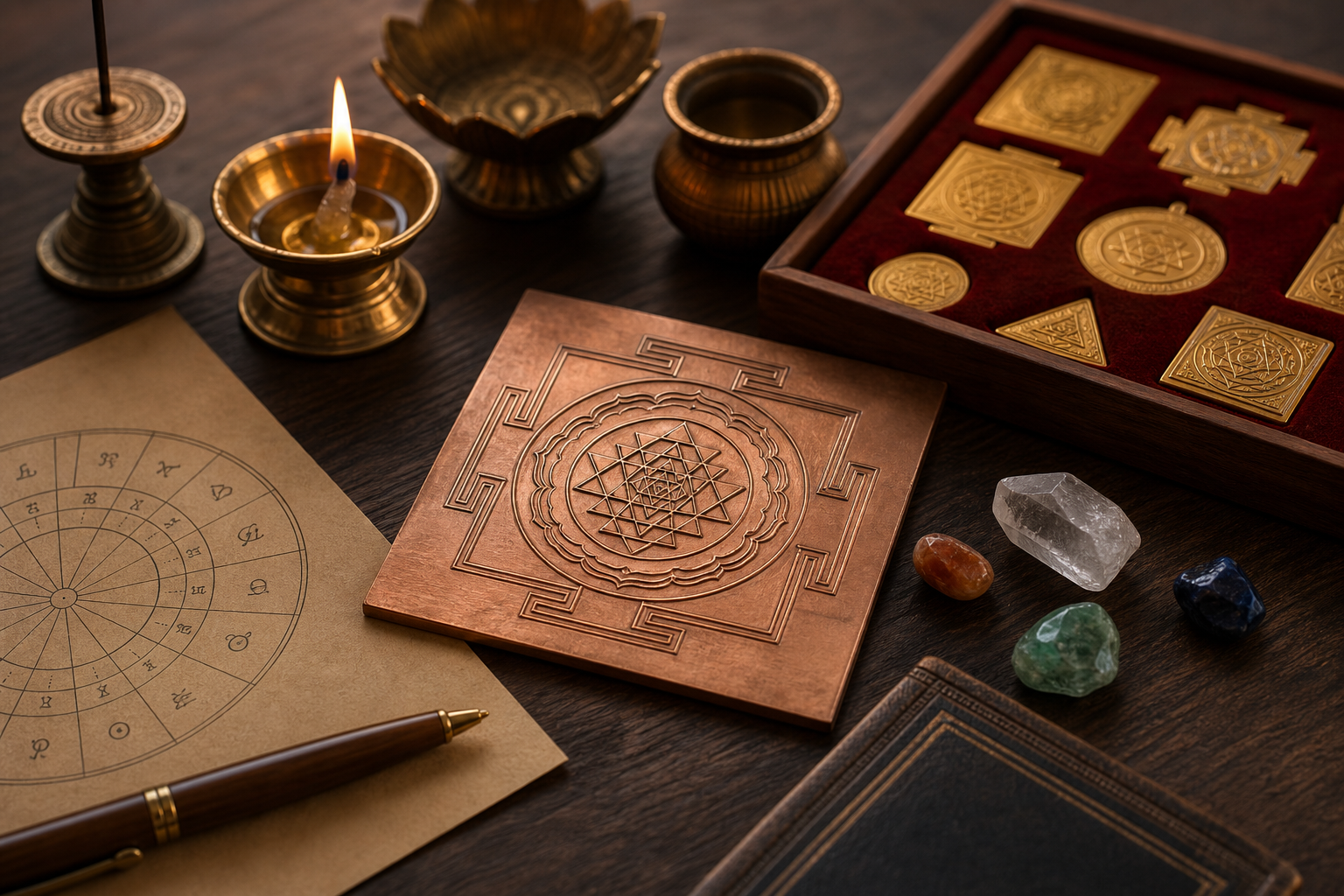
Yantras—geometric diagrams rooted in Vedic and Tantric traditions—are used as sacred tools for focus, intention-setting, and spiritual practice. Choosing one thoughtfully matters: the right yantra can align with your goals and daily discipline; the wrong fit can confuse your efforts. This guide walks you through a grounded, step-by-step yantra recommendation process so you know what to expect, what questions to ask, and how to care for a yantra over time.
What is a yantra and why it matters
A yantra is a symbolic, structured diagram composed of shapes like triangles, circles, petals, and bindu (a focal point). Each yantra represents a specific archetype, deity principle, or energetic quality. In practice, a yantra serves three roles:
- As a visual anchor to steady the mind.
- As a ritual object that can be installed, honored, and maintained.
- As a personalized aid tied to your intention, time cycles, and spiritual path.
The “recommendation” aspect is the bridge between a general yantra and one that is suitable for you—considering your intentions, timing, and readiness for regular practice.
Principles behind yantra recommendation
While exact methods vary across lineages, most careful yantra recommendations rest on these principles:
- Clarity of aim: You name a focal aim (for example, steadiness in meditation, disciplined study, or harmonious relationships). The yantra should support the aim rather than replace personal effort.
- Timing and cycles: Recommendations often consider temporal cycles (such as auspicious days) to initiate or strengthen practice rhythms.
- Appropriateness over popularity: The “right” yantra is not the trendiest one; it is the one you can respectfully maintain and integrate into life.
- Ethical orientation: The intention behind practice matters. Recommendations prioritize remedies that align with non-harm and responsibility.
Step-by-step yantra recommendation process
Use this structured process as a roadmap for consultations and self-preparation. You can adapt details to your tradition and advisor’s guidance.
-
Intake and intention setting
Start with a frank conversation about your current life focus. Summarize in one sentence what you hope your yantra practice will support. Narrowing your intention avoids mismatched choices. -
Background and readiness review
Discuss your prior spiritual or meditative practices, time constraints, and ability to maintain simple daily rituals. A yantra that requires more upkeep than you can give is rarely the best first step. -
Tuning the recommendation
Based on your aims and timing, an advisor may suggest one primary yantra and, in some cases, a supporting practice (such as a short mantra, breath awareness, or mindful journaling). The focus is clarity, not stacking too many remedies. -
Form factor selection
Decide on material (for example, copper plate or paper print), size, and whether the yantra will be framed. Choose durability and practicality over ornamentation. -
Placement guidance
Identify a stable, quiet spot free from clutter and excessive foot traffic. Maintain respectful height, good light, and a clean surface. If you live with others, choose a place that can remain undisturbed. -
Initiation and simple routine
On a suitable day, place the yantra, offer clean water or flowers if you wish, and sit for a few minutes of focused attention. Keep the routine brief and consistent so it becomes sustainable. -
Follow-up and adjustment
After several weeks, review how the routine feels. If you find strain or confusion, adjust timing or simplify steps. The best routine is the one you can keep.
How to prepare questions and intentions
Preparation makes your consultation and choice more precise. Use these prompts to clarify your needs:
- What single intention would you prioritize for the next 90 days?
- How many minutes per day can you realistically dedicate?
- Which distractions or constraints (space, roommates, schedules) must your routine respect?
- What does “progress” look like to you—more calm, better focus, kinder communication?
- What practices have you maintained successfully before?
Bring your answers to any advisor so the recommendation fits your life, not an abstract ideal.
Selecting material, size, and placement
Form influences function. Consider these practical choices before acquiring a yantra:
- Material: Choose a medium you can care for easily. Metals are durable; paper prints are accessible and light.
- Size: A modest size (that you can comfortably see from your sitting position) is better than a large piece that dominates a room.
- Finish and frame: A simple frame protects the surface and signals respect. Avoid reflective glare that strains the eyes.
- Placement: Quiet corner, clean shelf, or a dedicated niche. Keep it above waist height, away from heavy electronics or clutter piles.
- Portability: If you travel often, consider a smaller, durable version you can safely pack.
Activation, maintenance, and ethics
“Activation” can be as simple as beginning with attention, sincerity, and a clean environment. If your tradition includes specific rites, follow them respectfully and within your capacity. Beyond first steps, consistent maintenance matters most.
Daily or weekly care checklist:
- Wipe dust gently with a clean cloth.
- Keep a small glass of fresh water or a flower nearby if you choose, and refresh regularly.
- Spend a few minutes in silent focus, breath awareness, or mantra repetition.
- Close each session with gratitude and a clear intention for the day.
Ethically, approach yantra practice as a complement to personal responsibility. It is not a shortcut or a substitute for learning, communication, or professional support in practical matters.
Common mistakes to avoid
- Collecting many yantras at once: Multiplicity dilutes attention. Start with one primary yantra.
- Skipping basics: A clean, quiet corner and five steady minutes beat elaborate steps you cannot sustain.
- Chasing outcomes: Track your discipline first; let outcomes follow.
- Inconsistent placement: Moving your yantra frequently disrupts routine memory cues.
- Over-customization early on: Master a simple daily rhythm before adding layers.
Integrating yantra with other remedies
Yantras are often paired with supportive practices such as mantras, mindful breath, or small acts of service. Keep integration lean and coherent:
- Choose one supportive practice that reinforces your main intention.
- Time-box the routine (for example, 7–12 minutes) to prevent overload.
- Review quarterly; retain what you consistently keep, drop what you don’t.
If you also observe timing cues (such as beginning on an auspicious day), treat them as rhythm aids rather than guarantees.
Signs to review or adjust your yantra
Reassessment is part of a healthy process. Consider a review when:
- Your core intention has changed (for example, from stabilizing emotions to deepening concentration).
- The routine feels forced for more than a few weeks despite simplification.
- Life logistics shift (a move, new schedule, shared space changes).
- You experience persistent confusion about steps or symbolism.
In a review, check three levers first: intention clarity, routine length, and placement quality. Many issues resolve with small refinements.
Frequently asked questions
How long should I commit before evaluating results?
Give your routine a fair trial—often 6 to 12 weeks of steady practice—before you assess. Track what you control: session regularity, session quality (distraction notes), and how you feel before versus after practice. Outcomes tend to follow consistency.
Can I keep a yantra in my bedroom or workspace?
Yes, if you can maintain respect and quiet. In a bedroom, avoid placing it at foot level or where it will be obscured by clutter. In a workspace, use a simple frame and place it where you can take brief, focused pauses without disturbance.
Do I need elaborate rituals to “activate” a yantra?
Not necessarily. Many practitioners begin with simple steps: cleaning the space, a short intention, and steady daily attention. If your tradition includes specific rites and you have guidance and capacity, you may incorporate them. Consistency matters more than complexity.
Is it okay to combine multiple yantras?
For most people, starting with one primary yantra is best. If you later add another, ensure the intentions do not conflict and that you have time to respectfully maintain both. When in doubt, keep your setup minimal.
What if family members don’t share my practice?
Choose a discreet, well-kept place that does not inconvenience others. Communicate your routine respectfully and keep your materials tidy. A small, framed yantra in a personal study corner often works well.
Is a yantra a substitute for professional advice?
No. Yantra practice is a spiritual and contemplative aid. It is not a replacement for medical, legal, financial, or mental health advice. For those matters, consult qualified professionals.
A simple 90-day practice plan
Use this light structure to build momentum without overwhelm:
- Days 1–7: Set placement; practice 5 minutes/day. Note distractions. Adjust lighting and seating until it feels natural.
- Days 8–30: Maintain 7–10 minutes/day. Add one supportive element (for example, three slow breaths at start and end).
- Days 31–60: Continue daily practice; one weekly tidy-up of the space. Record one sentence after practice about your state of mind.
- Days 61–90: Review intention. Keep what works, remove what doesn’t. Decide whether to continue as-is, simplify, or consult for refinements.
Consultation checklist for clarity
Bring this list to your advisor so your session stays focused and productive:
- Your one-sentence intention for the next 90 days.
- Time you can commit daily (realistic, not idealized).
- Your living-space constraints and preferred placement options.
- Prior practices you’ve maintained successfully.
- Any sensitivities (for example, materials, incense, or fragrances) to avoid.
- Questions about symbolism, maintenance, or review cadence.