



A Practical Guide to Birth Chart Analysis Basics
A Practical Guide to Birth Chart Analysis Basics
Birth chart analysis basics begin with learning the map itself: the snapshot of the sky at your exact birth time, date, and place. Whether you explore Western or Vedic methods, the essentials are similar—planets, signs, houses, and aspects. This guide walks you through the foundations, a beginner-friendly reading sequence, common pitfalls to avoid, and a short practice plan so you can build skill steadily.
What is a birth chart?
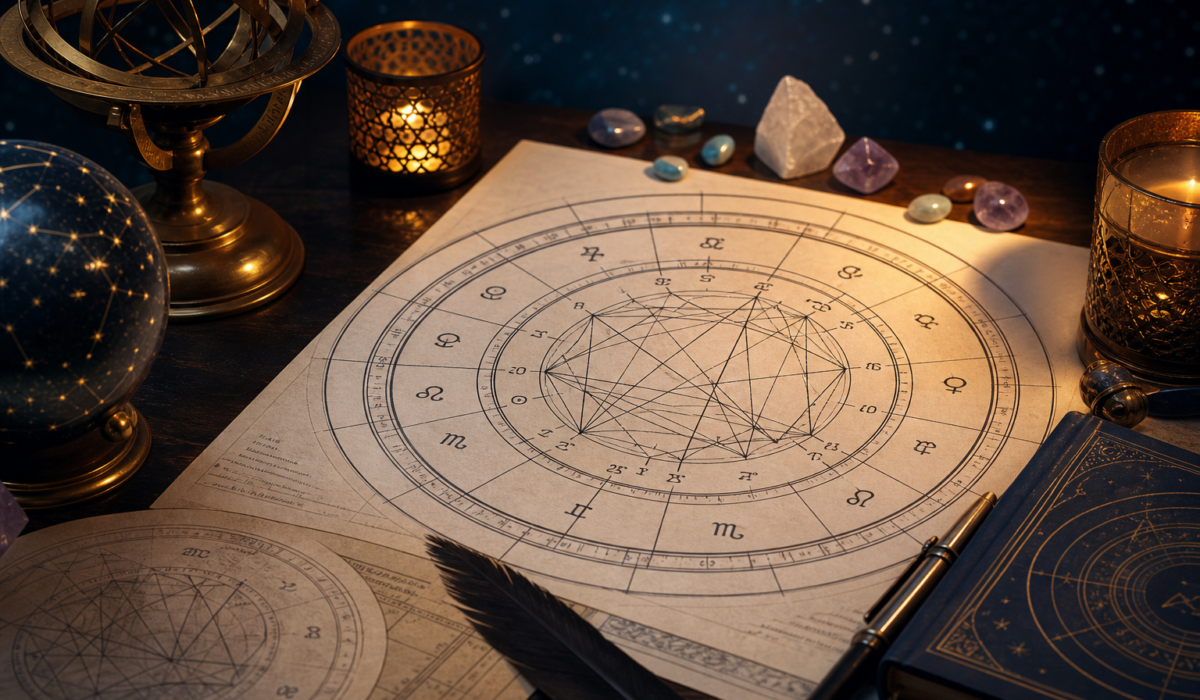
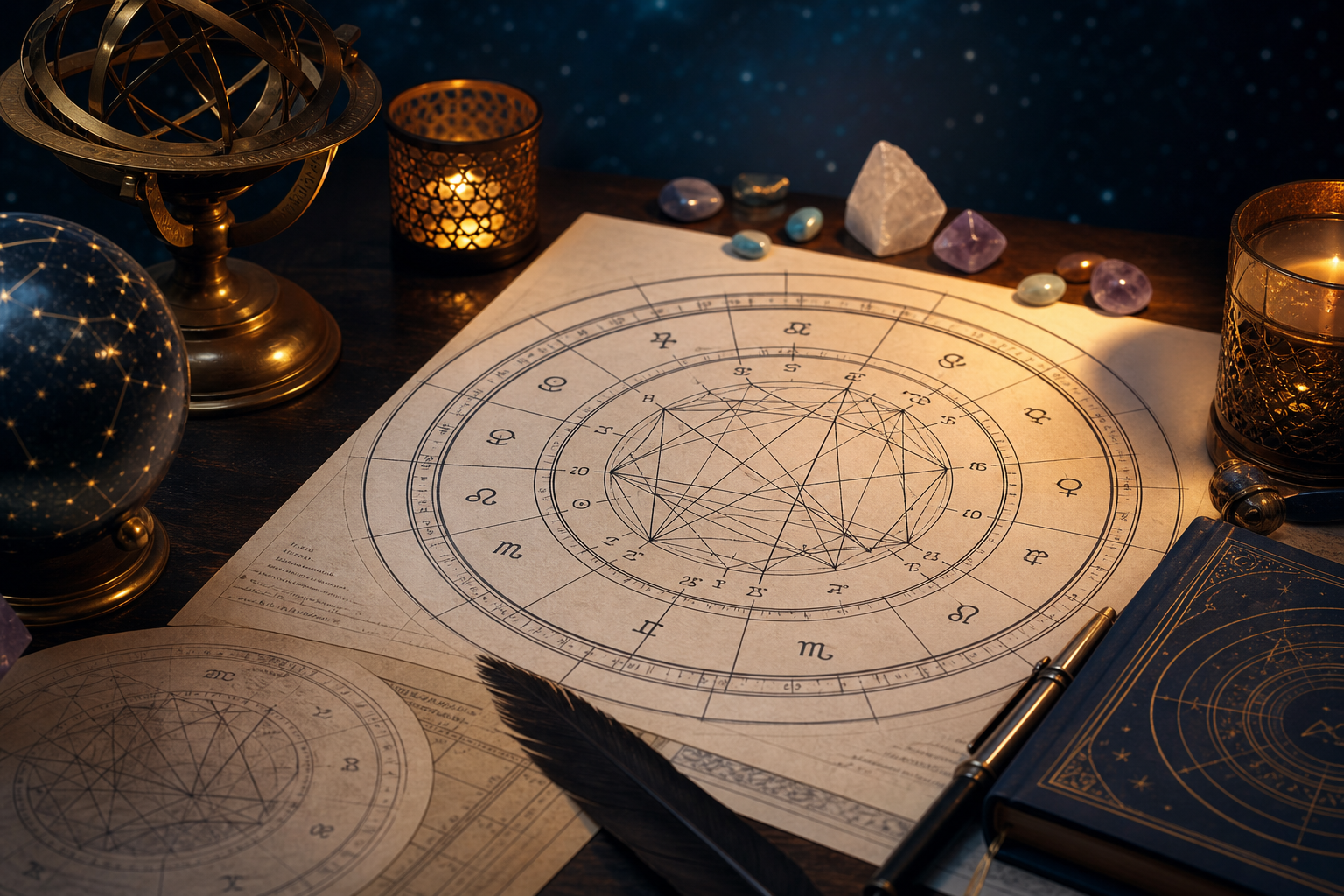
A birth chart (also called a natal chart) is a diagram that plots the positions of the Sun, Moon, and planets relative to Earth at your moment of birth. It is divided into twelve sections called houses, and each planet is placed in a zodiac sign and a house. Interplanetary angles, known as aspects, describe how these planetary energies interact. The chart is used for interpretive insights; it does not determine outcomes. Your choices, circumstances, and context all matter.
- Planets: active principles (what acts)
- Signs: styles or qualities (how it acts)
- Houses: life arenas (where it acts)
- Aspects: relationships between planets (how parts of the chart communicate)
Accurate data matters. A small change in birth time can shift the house placements and the rising sign, which can alter interpretations. If your birth time is uncertain, consider a wider, more flexible approach to house-based conclusions.
Gathering accurate data
To start, collect:
- Birth date (with correct year)
- Exact birth time (from an official record when possible)
- Birth city and country
With these details, any chart calculator can produce a wheel (for Western) or a North/South Indian style chart (for Vedic). If you do not have a precise time, you can still study planets-in-signs and planetary aspects, but be cautious with the ascendant and house-specific conclusions.
Chart systems at a glance
There are multiple traditions. Two commonly encountered approaches are:
- Western astrology: typically uses the tropical zodiac and a circular chart wheel. It often employs house systems like Placidus, Whole Sign, or others.
- Vedic astrology (Jyotish): typically uses the sidereal zodiac and distinct house calculation methods. Charts are often displayed in North or South Indian formats and place strong emphasis on the Moon, dashas (planetary periods), and other techniques.
Knowing which system your chart comes from clarifies terminology and expectations. The basics—planets, signs, houses, and aspects—remain central in any approach, though their calculation and emphasis can differ.
The 12 houses: a quick reference
Houses describe where themes tend to play out. A straightforward way to remember them is to think of each house as a life arena:
- First: identity, approach to life, the lens through which others first perceive you
- Second: personal resources, income, skills, values
- Third: communication, learning, siblings, short trips
- Fourth: home, family, roots, private life
- Fifth: creativity, joy, romance, hobbies
- Sixth: work routines, daily habits, service, maintenance
- Seventh: one-to-one partnerships, agreements, collaboration
- Eighth: shared resources, deeper bonds, transformations
- Ninth: beliefs, big-picture learning, exploration
- Tenth: public role, reputation, direction
- Eleventh: communities, networks, aspirations
- Twelfth: reflection, rest, solitude, closure
When reading a chart, combine house topics with the nature of the planet placed there and the sign on the house cusp to form layered meanings.
Planets and core themes
Each planet symbolizes a type of action or need. Here is a concise set of keywords to orient your interpretations:
- Sun: vitality, purpose, central expression
- Moon: needs, moods, instincts, memory
- Mercury: thinking, messages, coordination
- Venus: relating, preferences, aesthetics
- Mars: drive, assertion, response to friction
- Jupiter: growth, perspective, opportunities
- Saturn: structure, limits, long-term effort
- Uranus: change, innovation, disruption
- Neptune: imagination, ideals, diffusion
- Pluto: depth, power dynamics, renewal
In many traditions, the Sun and Moon are foundational. Mercury, Venus, and Mars add personal style. Jupiter and Saturn speak to maturation and frameworks. The outer planets (Uranus, Neptune, Pluto) describe broader cycles and generational textures, activating personal stories when closely connected to the chart’s angles or personal planets.
Signs, modalities, and elements
Signs give planets and houses a style. Two quick lenses help beginners: elements and modalities.
- Elements: Fire (energetic), Earth (practical), Air (mental), Water (intuitive)
- Modalities: Cardinal (initiating), Fixed (sustaining), Mutable (adapting)
Blend the planet’s theme with the sign’s style. For example, Mercury in a practical Earth sign may communicate steadily and concretely, while Mars in a Fire sign may express direct, fast action. Over time, you will develop a feel for these combinations across the chart.
Aspects: how planets “talk” to each other
Aspects describe angular relationships between planets. The most commonly used include:
- Conjunction (0°): planets merge or amplify each other
- Sextile (60°): opportunities through cooperation
- Square (90°): friction that prompts effort and growth
- Trine (120°): ease and natural flow
- Opposition (180°): polarity seeking balance or integration
Close aspects (tight orbs) tend to be more noticeable. Interpret aspects by blending the two planets’ themes, the signs they occupy, and the houses they connect.
A beginner reading sequence
Begin with structure, then add detail. A simple, repeatable order helps you avoid getting lost in data:
- Confirm birth data: time, date, and place. Note the chart system (Western or Vedic).
- Identify the Ascendant (rising sign): sets the chart’s tone and house layout.
- Scan the luminaries: Sun and Moon by sign, house, and major aspects.
- Check the personal planets: Mercury, Venus, Mars—how you think, relate, and act.
- Review Jupiter and Saturn: long arcs of growth and responsibility.
- Note outer planets only when closely linked to personal points: they can mark defining themes.
- Assess planet distribution: elements, modalities, and hemispheric balance (e.g., emphasis above/below or left/right of the chart wheel).
- Synthesize a few core statements: 3–5 sentences that summarize strengths, challenges, and styles.
Keep notes concise. When you finish, ask: does the synthesis reflect the chart’s most repeated patterns? If not, refine and simplify.
Retrogrades and nodes, in brief
Retrograde planets appear to move backward from Earth’s perspective. In interpretation, a retrograde planet can suggest internalized processing or a revisiting of a planet’s themes. The lunar nodes (North and South) are often used to frame developmental arcs or key learning areas. Treat them as supplemental layers; start with planets, signs, houses, and aspects first.
Timing basics with transits
Transits compare current planetary positions to your birth chart. When a transiting planet aspects a natal planet or angle, that natal theme may activate. Beginners can track:
- Fast movers (Moon, Mercury, Venus, Mars): short-term moods or tasks
- Jupiter and Saturn: annual to multi-year development cycles
- Outer planets: longer arcs that coincide with significant life chapters when tightly connected to natal points
For steadiness, correlate transit dates with your actual experiences. Journaling creates feedback that sharpens interpretation over time.
Common pitfalls to avoid
- Overloading on details: prioritize the biggest patterns before adding nuance.
- Relying on a single factor: corroborate with at least two or three indicators.
- Making deterministic claims: astrology is interpretive; your choices and context are crucial.
- Ignoring birth time accuracy: be cautious with house-based conclusions if time is uncertain.
- Forgetting synthesis: aim to convert data points into clear, practical insights.
A simple practice plan
Consistency builds fluency. Try this four-week routine:
- Week 1: Learn your Ascendant, Sun, and Moon by sign, house, and aspects. Write five sentences that capture their combined message.
- Week 2: Add Mercury, Venus, and Mars. Note two patterns in elements and modalities that repeat.
- Week 3: Study Jupiter and Saturn placements. Identify one growth theme and one responsibility theme supported by multiple indicators.
- Week 4: Review aspects among personal planets. Journal three real-life examples that fit your chart’s patterns.
At the end of four weeks, condense your notes into a one-page synthesis. Revisit this summary every few months as your understanding evolves.
Ethical and practical notes
- Respect confidentiality when reading for others.
- Avoid medical, legal, or financial assurances; for those matters, consult qualified professionals.
- Frame interpretations as possibilities and themes, not certainties.
- Invite feedback: ask whether insights resonate and adjust accordingly.
FAQ
Do I need my exact birth time for a useful reading?
Exact time improves accuracy for the Ascendant and house placements. Without it, you can still study planets-in-signs and aspects, but apply caution when drawing house-based conclusions.
Which should I learn first: planets, signs, houses, or aspects?
Start with planets and their core meanings, then add signs as the style layer. Next, fold in houses to understand life arenas, and finally connect everything with aspects. This sequence helps avoid overwhelm.
How do I handle conflicting indicators?
Look for repetition. If three factors point to a theme and one contradicts it, give more weight to the repeated message. Then re-check the outlier—sometimes it describes context or timing rather than the main pattern.
Are retrogrades “bad” in a chart?
Retrograde simply describes an apparent motion. Interpretively, it may emphasize reflection or internalization around that planet’s topics. As always, consider the whole chart before forming conclusions.
Next steps
Limitations: Astrology is an interpretive framework and not a substitute for professional medical, legal, mental health, or financial advice. For those matters, consult a qualified professional.
1 Comment
Comments are closed.