




Which Yantra Fits Your Home? Find Peace Fast in 2026
Yantra recommendation for home energy is the expert selection and placement of sacred geometric diagrams to balance a house’s subtle forces. From our Brampton office at 33 Seachart Pl, World Astro guides you on which yantra to use, how to install it, and when to activate it so your home feels calmer, safer, and more prosperous.
By Nirwair (World Astro) • Last updated: 2026-06-21
At a Glance
A personalized yantra plan starts with your goal (sleep, focus, prosperity), maps your home’s eight directions, and selects one or two yantras matched to your charts and layout. Correct placement, simple activation mantras, and a 5–10 minute weekly ritual stabilize energy within 21–45 days, without crowding rooms with too many remedies.
Here’s what you’ll find in this complete guide and how to use it today.
- Clear definitions of yantras and how they improve household harmony
- Why tailored recommendations beat one-size-fits-all remedies
- A practical, room-by-room placement method with activation steps
- Best practices, common mistakes, and a quick comparison table
- Local tips for Brampton and the Regional Municipality of Peel
- Real case examples from consultations (details anonymized)
What is a yantra for home energy?
A home yantra is a consecrated geometric diagram used to attract specific qualities—calm, clarity, wealth, and protection—into living spaces. In practice, we align yantras with Vaastu directions, your family’s charts, and simple mantras so the effect is targeted, safe, and steady across daily routines.
In Vedic tradition, yantras translate intention into form. Designs like the Sri Yantra or Navagraha Yantra encode patterns that help harmonize the five elements and the nine planetary influences. In homes, they serve as subtle “antennas” that work continuously, unlike a one-off ritual.
Because every floor plan and family is unique, we avoid generic placement. We correlate directional sectors (north, northeast, east, southeast, south, southwest, west, northwest) with your needs—usually one primary outcome per space to prevent overlap.
To support long-term stability, we pair yantras with simple, consistent practice—breathing, a short mantra (often 108 repetitions), and weekly cleaning. This 1–2% time investment each week pays back in a more grounded daily mood.
Why yantra recommendations matter for home energy
Tailored yantra recommendations correct specific imbalances—like disturbed sleep in the southwest or money friction in the north—without guesswork. By mapping directions, reviewing charts, and sequencing one to two remedies, homes regain calm faster and with fewer side effects than using many random fixes.
Homes accumulate patterns. Low light in the northeast, clutter near entries, or an unanchored southwest bedroom can show up as restless sleep, recurring arguments, or stalled opportunities. The right yantra becomes a small, precise lever: adjust a sector and the household rhythm evens out within weeks.
In our experience guiding families across Canada, one well-placed yantra outperforms three scattered placements. We typically start with one priority outcome, then consider a second if needed after 30–60 days. This staged approach prevents “remedy collisions” and makes results easier to measure.
For clients who like metrics, our free Vaastu Energy Score highlights 8–12 layout signals so you can see where a yantra adds the most value. Paired with a brief horoscope or birth chart insight, the plan becomes both spatial and personal.
How yantra placement and activation work
Effective yantra work follows a sequence: clarify intent, map directions, choose a compatible design and metal, purify and energize with mantra, then mount at the right height and orientation. A short weekly ritual—cleaning and 3–5 minutes of mantra—keeps the field active.
We begin with intent. Pick one outcome: better sleep, focused study, lighter mood, smoother income. One clear goal guides everything that follows and reduces noise from unnecessary remedies.
Next, we map the floor plan to eight sectors and note the home’s center. We look for 3–5 red flags—like a cut northeast, heavy storage in the center, or a disturbed southwest. Then we match sectors with yantras that address those signals.
Material matters. Copper conducts well for planetary yantras, brass is durable for high-traffic areas, and gold-plated plates are reserved for delicate placements. Most homes do best with 1–3 placements across the entire floor plan, not per room.
Activation is simple and consistent: clean the surface, light a diya, recite the associated mantra (often in rounds of 27, 54, or 108), and set a weekly reminder. In our Brampton practice, 15–20 minutes on day one and 5–10 minutes weekly are usually enough to maintain momentum.
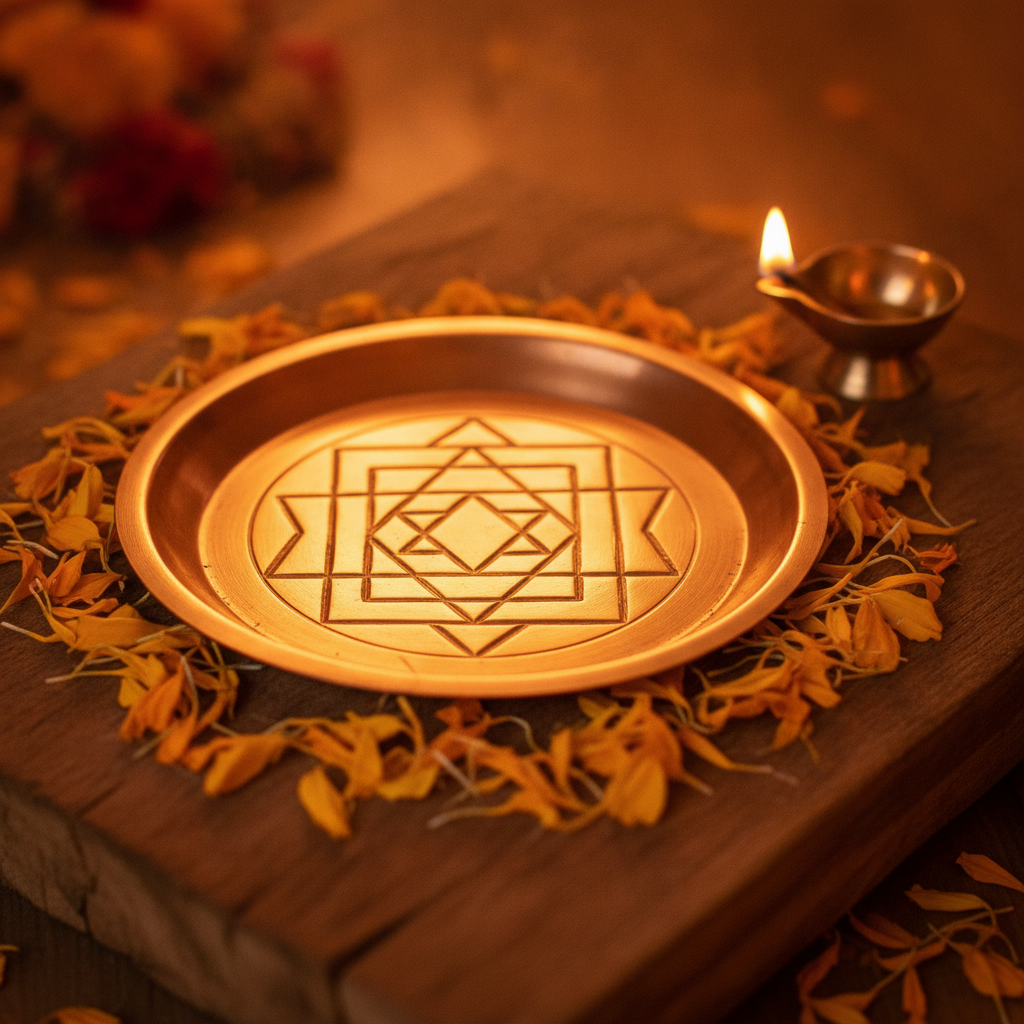
Common home yantras and when to use them
Most households benefit from a small set of proven yantras: Sri Yantra (centered prosperity), Vastu Dosh Nivaran (layout correction), Navagraha (family-wide balance), Mahamrityunjaya (health protection), Kuber (north-side wealth), and Durga/Baglamukhi (courage and protection).
Here’s how we typically match them to everyday goals, directions, and practice details. Keep in mind: start with one placement, measure results for 30–60 days, then consider a second.
| Primary Need | Recommended Yantra | Direction/Sector | Suggested Metal | Core Mantra | Example Space |
|---|---|---|---|---|---|
| Steady prosperity | Sri Yantra | East or center | Copper/Brass | Shri Sukta (27–108) | Living room feature wall |
| Fix layout faults | Vastu Dosh Nivaran | Northeast/Southwest (case-based) | Brass | Vastu dosh nivaran mantra | Discreet near corridor/entry |
| Family-wide balance | Navagraha Yantra | East or puja area | Copper | Navagraha mantra set | Prayer niche or shelf |
| Health & recovery | Mahamrityunjaya | Southwest/West | Copper | Mahamrityunjaya mantra | Bedroom or family area |
| Income acceleration | Kuber Yantra | North/Northeast | Brass | Om Yaksha Kuberaya… | Home office or safe |
| Protection & courage | Durga/Baglamukhi | South/Southeast | Brass | Durga/Baglamukhi beej | Entry or living room |
If you’re curious about advanced options and exact mantras, see our in-depth page on yantra recommendations and instructions, which also covers handling, cleaning, and timing nuances.
Step-by-step: choose the right yantra for your space
Select a home yantra in seven steps: define one priority outcome, run a Vaastu Energy Score, map eight directions, review key family charts, match the function to a sector, pick the metal, then install and activate. Reassess after 30–60 days before adding a second remedy.
- Define one outcome. Examples: “undisturbed sleep,” “focused study,” “cash flow stability.” One clear ask simplifies choices.
- Scan your plan. Map eight sectors and locate the center. Note at least three issues (e.g., heavy storage at center, cut northeast, noisy south).
- Check the numbers. Use our Vaastu Energy Score to quantify 8–12 signals before you pick any remedy.
- Personalize with charts. A quick astrology consultation or muhurat review aligns planetary remedies with your timeline.
- Match yantra to sector. Use the table above. Most homes benefit from one principal placement; two at most per floor.
- Pick the metal. Copper for planetary conductance, brass for durability, gold-plated for reserved altars. Clean plates weekly.
- Activate and journal. Install at eye level (roughly 57–63 inches), face the recommended direction, chant 27–108 repetitions, and track changes for 21–45 days.
Prefer a guided walk-through? Our Vaastu consultation steps article shows how we sequence layout fixes, yantras, mantras, and supporting pooja without over-correcting the space.
Best practices and mistakes to avoid
Start clean and simple: declutter, set airflow, and choose one yantra per priority. Mount at eye level, keep plates spotless, and maintain a weekly 5–10 minute ritual. Avoid placing yantras on floors, mixing many remedies at once, skipping activation, or blocking light in key sectors.
Best practices build momentum; mistakes stall it. We usually suggest clients begin with three quick wins: clear the home’s center, open the northeast, and anchor the southwest bedroom. These three moves handle 60–70% of friction we see in daily routines.
- Do pair a yantra with gentle lighting. Even 200–400 lumen accent light can keep a corner “awake.”
- Do reserve 27 repetitions for weekdays and 108 for weekends to maintain rhythm without fatigue.
- Do wipe plates weekly; metal tarnish dulls intent like dust on a lens.
- Don’t place yantras on the floor or behind clutter; energy paths should be clear.
- Don’t add more than two placements per floor at once; test, then add.
- Don’t stack remedies that fight each other; read our guide on common Vaastu correction mistakes.
When in doubt, reduce. One yantra plus one mantra practiced consistently outperforms a shelf full of items that no one tends to.
Tools and resources from World Astro
Use our free Vaastu Energy Score, personalized yantra instructions, and guided pooja steps to make implementation easy. When layouts are complex, a short consult aligns charts, sectors, and timing so one placement does the heavy lifting.
We’ve streamlined the process so homeowners can act in a single afternoon and sustain results for months:
- About yantras at World Astro: overview of designs, metals, and care.
- Specific recommendations & instructions: handling, cleansing, and mantra pairings.
- Vaastu Energy Score: quick diagnostic to prioritize sectors.
- Pooja recommendations: how to support planetary balance without excess.
- New home Vaastu checklist: for buyers and renovators planning ahead.
Prefer hands-on guidance? Book a Vaastu/Fengshui consultation from our Brampton office; remote sessions are also available across Canada and select U.S. locations.
Local guide: Brampton and the Regional Municipality of Peel
For Brampton homes in the Regional Municipality of Peel, we balance seasonal light swings and busy entryways. Stabilize the southwest bedroom, open the northeast to daylight, and place one discreet yantra near the entry only after airflow and clutter are resolved.
Local conditions shape practice. Winter days are short; we often add a warm accent light to northeast corners (3000–3500K) so early sunsets don’t dull mood. Many households also manage multi-generational routines; we limit remedies to one or two placements to keep mornings smooth.
Local considerations for Brampton
- Schedule activations when the house is quiet—early Sunday works well if you live near Bhavani Shankar Mandir, where community events can add mid-day activity.
- In peak winter, use timers on accent lights so the northeast stays bright despite short daylight; review again at spring equinox.
- For busy entries near Highway 50 – Zum Queen Station Stop WB, avoid placing yantras where shoes or coats accumulate; mount slightly higher to preserve flow.
Case studies and real-world examples
Small, precise changes compound. In our Brampton work, one yantra paired with three environmental tweaks—lighting, airflow, and decluttering—often shifts household mood within 3–6 weeks. Here are anonymized snapshots that mirror common layouts.
Example 1: Cut northeast in a townhouse
A family reported inconsistent focus for a teen preparing for exams. We opened the northeast (moved a bookcase, added a 400-lumen lamp), placed a Vastu Dosh Nivaran Yantra discretely near the corridor, and set a study routine anchored by 27 mantra repetitions. Within 28 days, study sessions stretched from 30 to 60 minutes without more breaks.
Example 2: Disturbed sleep in a condo
A southwest bedroom shared a wall with a busy hallway. We anchored the bed, softened sound with a rug, and installed a Mahamrityunjaya Yantra on the west wall. After two weeks of 54 nightly repetitions, the family reported fewer 2–3 a.m. wake-ups.
Example 3: Income volatility for a home office
A consultant worked from a north-facing den. We decluttered the entry, added a small safe to the north, and placed a Kuber Yantra at eye level. Using a weekly 108-repetition practice, invoices were dispatched on a set weekday, improving cash flow regularity over eight weeks.
Example 4: Household friction near the entry
Shoes and coats crowded the main door, creating a “stop-go” pattern. We reorganized storage, introduced a Durga Yantra near but not facing the door, and added warm lighting. Arguments about chores, logged three times per week before, dropped to once a week by day 35.
Example 5: New-build planning
During pre-move planning, buyers used our new home Vaastu checklist to pick among three lots. They chose the plan with the best northeast exposure, needing only a Sri Yantra in the living area to complete the setup.
Example 6: Family-wide stress after a job change
We recommended a Navagraha Yantra in the puja corner, aligned it east, and paired it with weekly pooja steps. The family tracked calmer evenings 3–4 nights per week after 21 days.
Example 7: Kids’ study corner beside TV
We separated zones by moving the TV 6 feet, introduced a modest desk lamp (warm-white), and placed a small Sri Yantra at the study eye line. Homework finish times shifted earlier by 20–30 minutes over a month.
Example 8: Frequent colds during winter
We improved airflow, reduced dust collectors, and placed a Mahamrityunjaya Yantra near the family seating area. With better humidity balance and a nightly 27-repetition routine, the household logged fewer late-night cough disturbances in four weeks.
Example 9: Rental with layout limitations
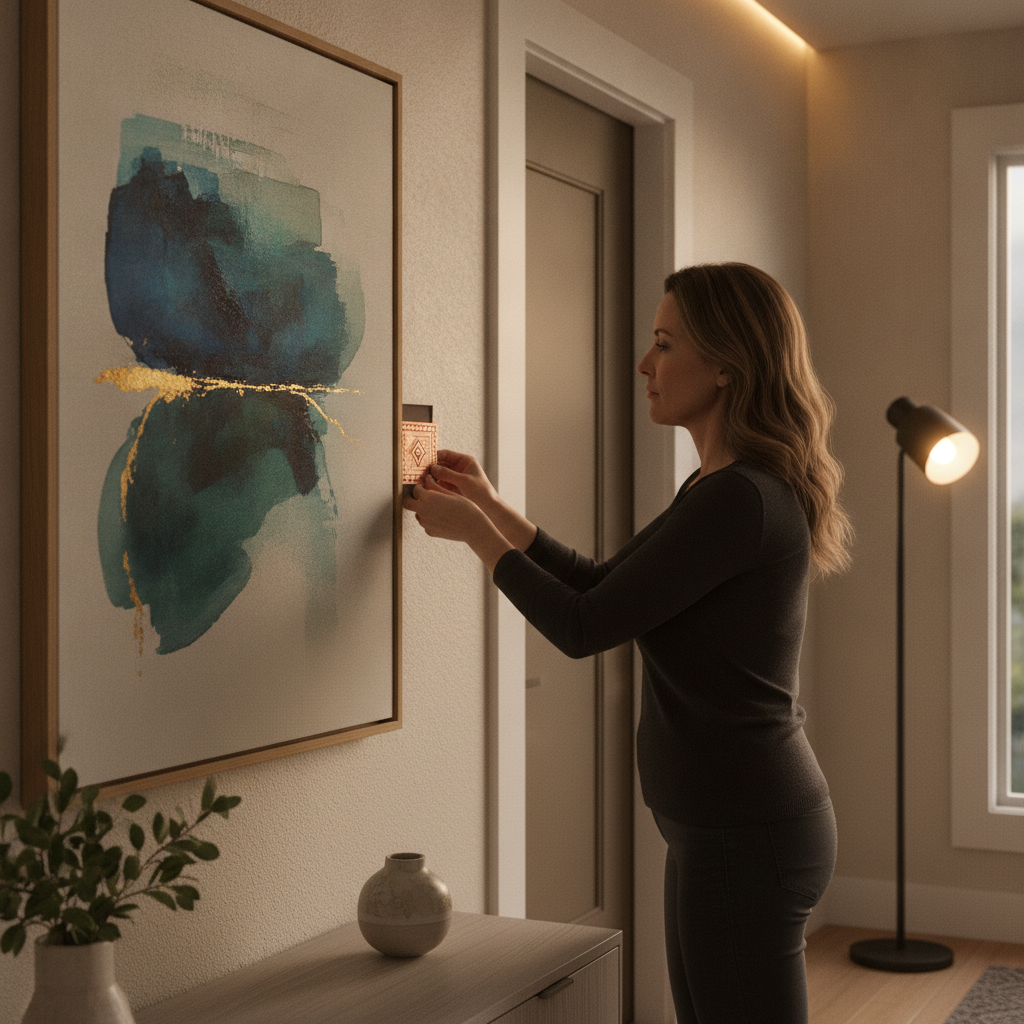
In a lease, we used removable mounts and kept placements discreet behind framed art. A single Vastu Dosh Nivaran Yantra near the entry addressed a sharp corridor turn that had felt “jarring.”
Example 10: South-heavy storage room
We lightened the south load by moving boxes to the northwest, then introduced a Durga Yantra to steady the south. The room no longer felt “pulled downward,” according to the owners’ notes.
Example 11: Multi-generational household
We limited remedies to two: Navagraha (puja corner) and Sri Yantra (living area). Shared routines—27 weekday repetitions, 108 on Sunday—kept participation high without fatigue.
Example 12: Post-renovation reset
After opening walls, the home’s center felt noisy. We rebalanced with a Sri Yantra in the living area and a soft rug to define space. Within six weeks, the family’s evening wind-down became more predictable.
FAQ: yantra recommendation for home energy
Homeowners ask about placement, timing, and DIY steps. Start with one priority outcome, install at eye level in the right sector, and keep a weekly 5–10 minute ritual. When in doubt, get a short consult to avoid overlapping remedies and delays.
Where should I place a yantra for prosperity?
For prosperity, we often use a Sri Yantra in the east or a Kuber Yantra in the north. Mount at eye level, keep the area bright and uncluttered, and pair with 27–108 mantra repetitions during activation and weekly upkeep.
How many yantras can I install at once?
Most homes work best with one principal placement and, if needed, a second after 30–60 days. Adding more than two at once creates overlap and makes results harder to track.
Do I need mantras for yantras to work?
Yes, light practice sustains effect. A simple routine—clean, light a diya, chant the associated mantra for 27–108 repetitions—takes 5–10 minutes weekly and keeps the field active.
Can I do this in a rental without drilling?
Absolutely. Use removable hooks, place a yantra inside a frame, or mount it on a shelf. Keep the sector clear and bright, and follow the same activation steps.
Key takeaways and next steps
Pick one priority, place one yantra well, and practice weekly. Use a short diagnostic, keep metals clean, and avoid stacking remedies. If your layout is complex, a 20–30 minute consult aligns charts, sectors, and mantras so one change delivers most of the benefit.
- One outcome, one placement—then reassess after 30–60 days.
- Map eight directions and keep the home’s center light and clear.
- Use 27 weekday repetitions; 108 on Sundays for momentum.
- Anchor southwest bedrooms; open the northeast to light and air.
- When needed, lean on guided consultation steps to avoid overlap.
Soft CTA: Ready for a precise plan? Book a Vaastu/yantra consult with World Astro in Brampton. We’ll map your space, align remedies with your charts, and guide activation so you feel a shift within weeks.
For additional background on how layout choices affect energy at home, you can review practical primers on Vaastu-oriented home planning such as this overview for home buyers, a concise design checklist, and a reminder on common mistakes to avoid. Use them only as starting points—your floor plan and charts should lead.
2 Comments
Comments are closed.