



Compatibility Charts: Avoid Confusing Signs in 2026
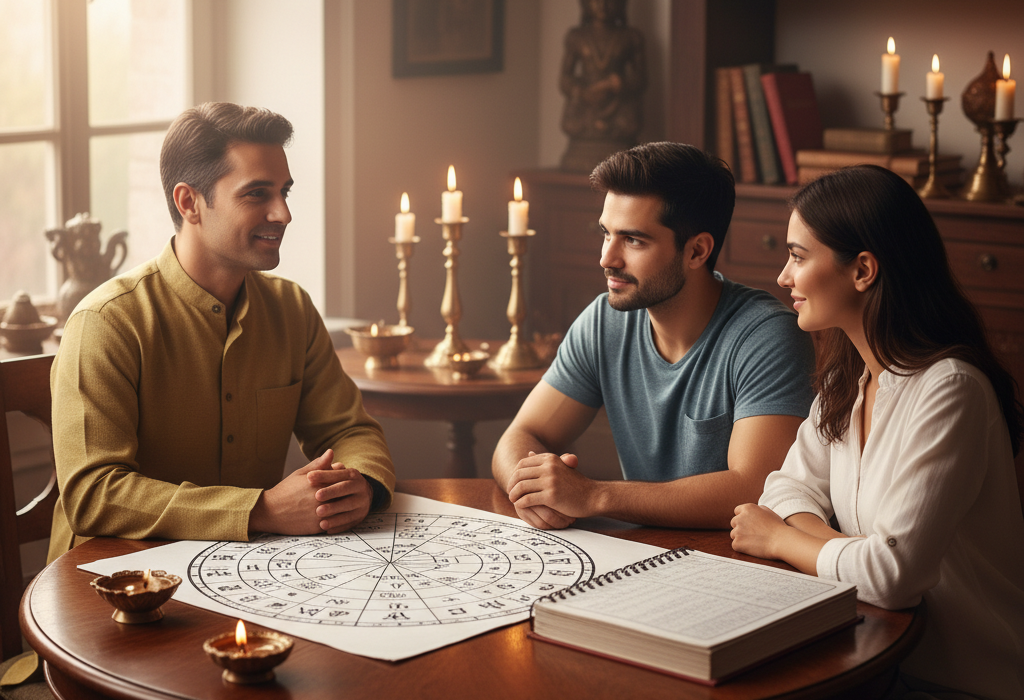
At World Astro in Brampton (33 Seachart Pl), a compatibility chart is a structured astrological analysis that compares two birth charts to map harmony, friction, and growth potential. This compatibility chart process explained here shows how accurate birth data, classical Vedic methods, and clear guidance turn confusing signs into confident relationship choices.
By Nirwair (World Astro) • Last updated: 2026-06-01
Quick Summary
A compatibility chart compares two natal charts to evaluate alignment in values, communication, intimacy, and long-term stability. Using synastry, composite or Navamsa analysis, and time-tested Vedic rules, an astrologer synthesizes strengths, cautions, and remedies—so couples get clear, practical next steps instead of mixed signals.
Here’s what you’ll find in this complete guide and why it matters if you’re dating, engaged, or married and want clarity you can act on.
- What a compatibility chart is in plain English, plus Vedic vs. Western angles.
- Why compatibility work reduces second-guessing and speeds decisions.
- Compatibility chart process explained step-by-step—from intake to remedies.
- Methods compared: synastry, composite, Navamsa (D9), and Ashtakoota (Guna).
- Best practices that prevent contradictory readings and “analysis paralysis.”
- Real cases from our Brampton practice, with timing and outcomes.
- What is a compatibility chart?
- Why compatibility analysis matters
- Compatibility chart process (step-by-step)
- Types, methods, and approaches
- Best practices to avoid confusion
- Tools and resources we actually use
- Case studies and real-world examples
- Applying this in Brampton and Peel
- Frequently asked questions
- Conclusion and next steps
What Is a Compatibility Chart?
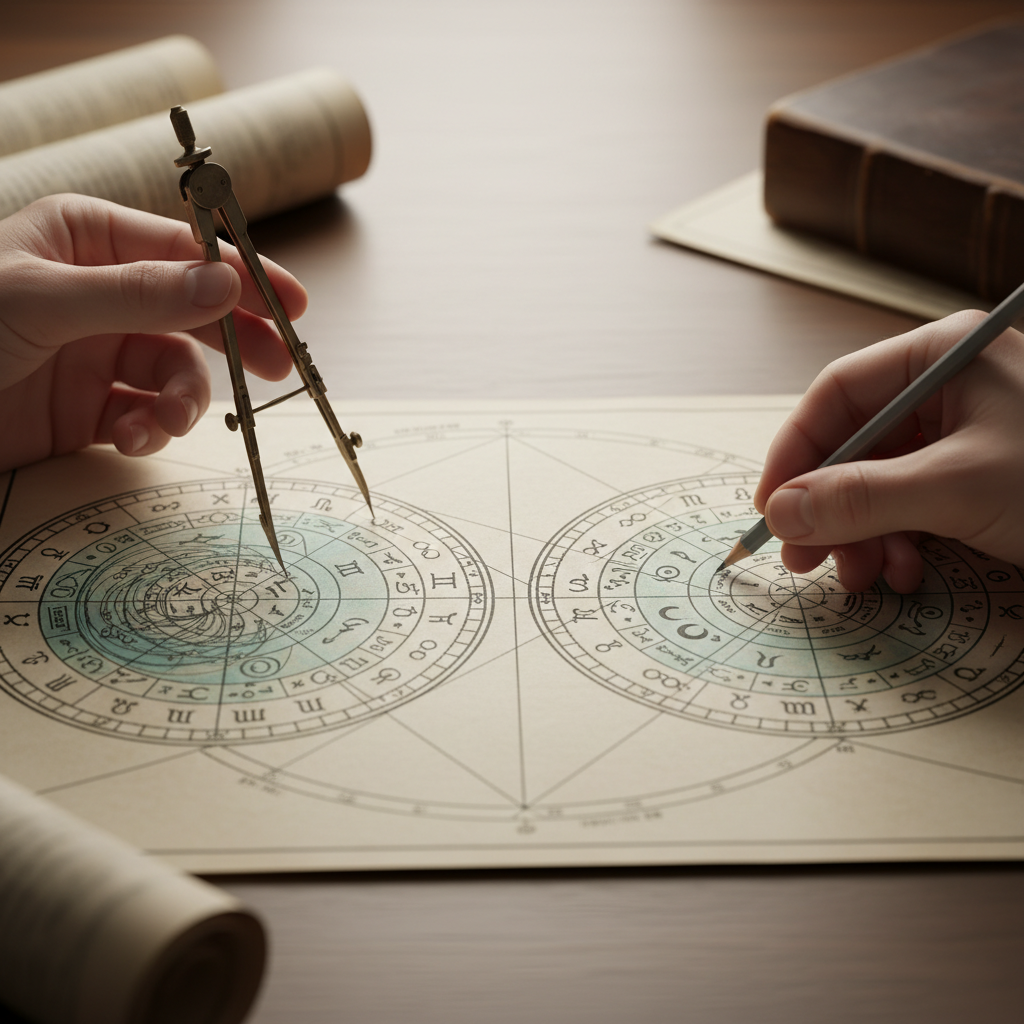
A compatibility chart is an astrological comparison of two birth charts (synastry) that evaluates how planets, houses, and aspects interact. The goal is to reveal harmony, challenges, and remedies across communication, values, intimacy, family, and timing—so partners can make informed, compassionate decisions.
In Vedic practice, we study the Moon (Chandra), Venus (Shukra), Mars (Mangal), and the 7th house as the core partnership axis. We also analyze Navamsa (D9) for marriage quality and apply Ashtakoota (Guna) matching to assess baseline alignment. Jupiter shows growth and generosity; Saturn reveals responsibility and durability; Mercury and the Moon set the tone for everyday communication.
- Synastry overlays: We place Partner A’s planets into Partner B’s houses and vice versa to see where life themes connect—home (4th), partnership (7th), status (10th), etc.
- Aspect texture: Supportive angles simplify bonding; tense angles require agreed repair rituals. In Vedic analysis, Mars, Jupiter, and Saturn cast special aspects that matter for trust and timing.
- Navamsa (D9): D9 acts like the “marriage substrate,” revealing long-term spiritual and ethical fit beyond surface chemistry.
- Ashtakoota (Guna) matching: Eight factors help set expectations—but never replace judgment or character.
New to this? Our primer on relationship foundations pairs well with this guide—see our love and relationships compatibility guide for context and key terms we use in consultations.
Why Compatibility Analysis Matters
Compatibility analysis reduces uncertainty by translating planetary interactions into everyday guidance—what to nurture, where to set boundaries, and how to time key steps. In Brampton and the Regional Municipality of Peel, couples use it to align family expectations with practical next moves.
Strong relationships rely on shared rhythm and quick repair—not just chemistry. A clear reading organizes signal from noise so you can stop overanalyzing texts, rescheduling tough talks, or delaying milestones. Communication flow (Mercury/Moon), shared values (Sun/Venus), conflict style (Mars/Saturn), and growth patterns (Jupiter) become visible and manageable when mapped correctly.
- Clarity under pressure: A two-page summary reduces arguments about “what we said.”
- Family buy‑in: Vedic frameworks help explain decisions across generations without blame.
- Right timing: Choosing shubh samay (auspicious windows) smooths engagements, weddings, and family introductions.
For deeper context on decision-making with astrology, explore our consultation guide for life decisions, which shows how couples translate a reading into a 30–60 day action plan.
Compatibility Chart Process Explained (Step-by-Step)
The process moves from intake and data collection to synastry overlays, Navamsa and Kuta scoring, timing analysis, and remedies. Each step builds evidence so recommendations are specific, ethical, and easy to implement as a shared plan.
Here is the end-to-end sequence we use at World Astro. It’s designed so you can follow along, ask sharp questions, and see how findings become next steps.
- Intake & goals: Clarify your purpose: dating clarity, engagement confidence, marriage tune-up, or family planning.
- Collect accurate birth data: Date, exact time, and birth city for both partners; rectify time if uncertain. Even a 4‑minute error can shift the Ascendant and house overlays.
- Create natal charts: Cast each chart using the sidereal zodiac with a consistent ayanamsha for Vedic analysis.
- Synastry overlays: Place planets across each other’s houses to find connection zones and friction points you can manage.
- Aspect review: Note supportive links and stress signatures; in Vedic terms, track drishti from Mars, Jupiter, and Saturn.
- Core indicators: Evaluate the 7th house, Venus/Mars, Moon’s stability, Jupiter’s uplift, and Saturn’s commitment tests.
- Navamsa (D9) review: Probe long‑term alignment, spiritual tone, and how the bond handles stress.
- Kuta/Guna matching: Score the eight factors; interpret in context of maturity, family, and timing. A “low” score is a caution, not a verdict.
- Timing windows: Identify shubh samay via transits and dashas to schedule sensitive talks, engagements, or ceremonies.
- Remedies & action plan: Assign proportionate remedies (mantras, gemstones, yantras, pooja) and simple Vaastu fixes; agree on daily/weekly habits.
| Step | Inputs | Output |
|---|---|---|
| Birth data | Dates, times, cities | Two accurate natal charts |
| Synastry | Charts A & B | House overlays, key aspects |
| Core indicators | 7th, Venus, Mars, Moon | Theme map: love, conflict, repair |
| Navamsa | D9 divisions | Marriage quality insights |
| Kuta/Guna | 8 factors | Contextual compatibility score |
| Timing | Transits/dashas | Shubh samay windows |
| Remedies | Planetary needs | Practical, ethical actions |
Want to prepare excellent questions? Use our compatibility questions checklist and this guide to what to ask an astrologer so your session yields decisions you can use this month.
Ready to move from mixed signals to a shared plan? Book a confidential compatibility session with Nirwair Ji. We’ll map strengths, name blind spots, and set timelines you both can trust.
Types, Methods, and Approaches
Astrologers cross-check synastry overlays, composite charts, Navamsa (D9), and Ashtakoota (Guna matching). No single score decides; a balanced synthesis yields guidance you can explain to family and act on together.
Below are the lenses we use in practice—each with clear strengths and limits. The right answer is usually in the blend, not in one metric.
Synastry overlays
- House emphasis: Planets in the 4th/7th/10th show home, partnership, and public alignment. Venus or Moon in the 7th often signals natural chemistry.
- Aspect texture: Soft aspects ease bonding; hard aspects require agreed repair habits (for example, 24‑hour “cool-off then decide” rules).
- Action tip: If Mars aspects the Moon, pre-plan repair rituals on Tuesdays (Mars day) and keep them consistent for 2–3 weeks.
Composite or Relationship charts
- Midpoint method: A composite chart treats the relationship as a third entity. It’s excellent for shared goals and public identity.
- Use case: Helpful in couples therapy or when business partnerships overlap with romance.
- Action tip: Translate three composite themes into weekly rituals you both can execute.
Vedic Navamsa (D9)
- Marriage substrate: D9 shows how vows hold under pressure and whether purpose aligns.
- Durability check: A strong D9 7th lord or benefic influence (e.g., Jupiter) often correlates with steadier recovery after conflict.
- Example: If D9 indicates steady Saturn support, build long‑horizon projects together (courses, savings goals) to channel that energy.
Ashtakoota (Guna) matching
- Eight factors: Varna, Vashya, Tara, Yoni, Graha Maitri, Gana, Bhakoot, Nadi.
- Context matters: We’ve seen couples with “average” scores thrive when timing, maturity, and remedies align. Scores guide; they don’t decide.
Curious about minimum Guna alignment? Our short explainer on how many Gunas should match puts expectations into practical perspective.
Best Practices That Prevent Confusing Signs
Prioritize accurate birth times, consistent ayanamsha, and ethical interpretation. Document findings in plain language, suggest remedies proportionally, and anchor decisions to timing windows you can both keep.
Much of the confusion we hear in second-opinion readings comes from data errors or mixing frameworks midstream. A few disciplined habits prevent 80% of contradictions and help partners follow through with confidence.
- Data accuracy first: Verify both birth times from official records or family logs; rectify if needed. Small errors ripple through Ascendant and house overlays.
- One framework, consistently: If you use sidereal Vedic settings, stick with them throughout the analysis. Avoid blending methods without context.
- Plain-English summaries: Convert technicals into a two-page plan with specific habits, review dates, and owner for each action.
- Ethics over fear: Avoid fatalistic language. Emphasize choice, practice, and remedy—then review results after 1–3 lunar cycles.
- Time your efforts: Use shubh samay for difficult talks; track outcomes. Two to three well-timed attempts often outperform ten random tries.
Want to sharpen your session prep? Our quick guide to talking to an astrologer helps you set goals, focus questions, and leave with a plan you both understand.
Comparison tables are useful when deciding between actions; for a neutral primer on comparison layouts, see this overview of comparison chart structures. Use the format to clarify choices—not to overwhelm each other with options.

Tools and Resources We Actually Use
Use reliable chart calculators, ephemerides, and time‑zone references with Vedic frameworks. Pair these with structured worksheets so your final recommendation reads like a plan, not a poem.
Tools don’t decide your future—people and timing do. But the right tools make the work clearer and faster. Here’s what we rely on in sessions and why.
- Chart calculators: Generate accurate natal, synastry, and Navamsa charts with sidereal settings. Consistency prevents redraw errors that skew readings.
- Ephemeris & time standards: Cross-check planetary positions and daylight saving shifts. A small time-zone oversight can move key house placements.
- Structured checklists: Intake, analysis, and output summaries keep couples aligned. For a general example of how checklists keep decisions practical, review this home design checklist concept.
- World Astro tools: Our site offers free daily/weekly/monthly horoscopes, a partner compatibility checker, and a Vaastu Energy Score you can track alongside relationship work.
- Muhurat alignment: When moving to engagement or wedding planning, read our notes on auspicious dates (muhurat) in wedding date timing.
Curious how checklists connect to real-life planning? Here’s a general explainer on Vaastu during home buying that shows how structured guidance turns beliefs into practical layout choices—an approach we mirror for relationship routines.
Case Studies and Real-World Examples
Anonymized sessions show how process, timing, and remedies change outcomes. Patterns repeat; disciplined follow‑through wins more than “perfect” scores do.
We protect client confidentiality and share only composite, anonymized patterns below. The aim is not to predict your story but to illustrate how a solid process turns insights into momentum.
Engagement timing clarity
- Situation: Brampton couple unsure whether to get engaged this quarter; family coordination felt tense.
- Signal: Strong Venus‑Jupiter links; Saturn transit advising patience for logistics.
- Action: Selected a shubh samay window; added a Friday Venus practice (shared gratitude notes).
- Result: Smoother talks with elders; plans confirmed within two lunar cycles.
Repairing conflict loops
- Situation: Partners with Mars‑Saturn friction and Mercury‑Moon misfires; arguments stalled decisions.
- Action: Weekly check‑ins with fixed agendas, Tuesday Mars discipline ritual, and simple Vaastu layout fixes for calmer shared spaces.
- Result: Fewer escalations; disagreements ended with decisions, not distance. Progress was visible after 3–4 weeks.
Long‑distance alignment
- Situation: Partners in different time zones; mixed signals over priorities and call schedules.
- Action: Timed tough talks during mutual Moon support; created a monthly “vision reset” on the same weekday.
- Result: Momentum returned; a visit schedule locked without resentment within one month.
If you want a pre-session filter, our marriage compatibility checklist helps you spot deal-breakers early and gather data we’ll need for accuracy.
Applying This in Brampton and Peel
Local context matters: families, commute rhythms, and community calendars shape timing and expectations. We blend Vedic analysis with practical planning that fits Brampton life and the wider Regional Municipality of Peel.
World Astro serves clients across Canada and select U.S. locations, but our home base is Brampton. That means we understand the weekly rhythm, cultural expectations, and the way extended family logistics affect timing windows. We plan with your real calendar, not an abstract one.
Local considerations for Brampton
- Plan sessions around community events near Bhavani Shankar Mandir & Cultural Centre to avoid travel stress.
- Winter weather can disrupt in‑person meetings; use remote readings and flexible shubh samay windows during storms.
- For busy commutes, align key talks after work or near the Highway 50 – Zum Queen Station Stop WB pattern.
New to consultations? Our overview on how to talk to an astrologer shows how to set goals and summarize outcomes for your family.
Frequently Asked Questions
Here are clear, direct answers to the questions couples ask most about compatibility charts—timing, accuracy, and what to do with a “low” score.
How accurate is a compatibility chart?
Accuracy depends on correct birth times and a consistent method. We use multiple lenses—synastry, Navamsa, and Guna matching—and we translate findings into habits and timing. Clients see the most benefit when they follow remedies and review progress after one to three lunar cycles.
What if our Guna score is low?
A low Ashtakoota score is a caution, not a verdict. We examine Navamsa strength, specific synastry patterns, and current timing. Remedies—like mantras, gemstones, or Vaastu adjustments—plus clear agreements often resolve the friction points the raw score can’t explain.
Can we do this remotely?
Yes. Most compatibility sessions happen online with shared charts. We collect birth details securely, screen‑share the analysis, and email a concise action plan with timing windows and remedies you can start the same week.
When should we schedule a reading?
Book before major decisions—engagements, moving in, weddings, or family introductions. If you’re already committed, schedule a tune‑up when conflict loops repeat or right before big calendar shifts so timing and expectations stay aligned.
How do remedies fit in?
Remedies are proportional to the pattern: mantras to steady the mind, gemstones to strengthen weak benefics, yantras and pooja for protection, and Vaastu tweaks to support calm spaces. We pair each remedy with a review date so you can see what’s working.
Conclusion and Next Steps
Great relationships aren’t luck—they’re designed. A disciplined compatibility process turns mixed messages into momentum with clear findings, right timing, and proportionate remedies you can practice together.
Key takeaways
- Blend methods—synastry, D9, and Guna—so no single score dominates decisions.
- Favor clarity and timing over “perfect charts.” Progress in 30 days beats a year of analysis.
- Remedies work best when tied to specific patterns and reviewed after 1–3 lunar cycles.
Action steps
- Gather both partners’ exact birth times and locations.
- Schedule a confidential consultation to walk through the steps above.
- Commit to one remedy and one timing agreement for 30 days; review results together.
Ready to book a discovery session in Brampton? We’ll align your charts, agree on a plan, and choose dates you can count on—together.
Related Guides in This Series
Explore our deeper dives on auspicious timing (muhurat), daily transit context, and practical remedies that support compatibility work over time. These background guides help families understand the “why” behind your plan and stay committed.
1 Comment
Comments are closed.