



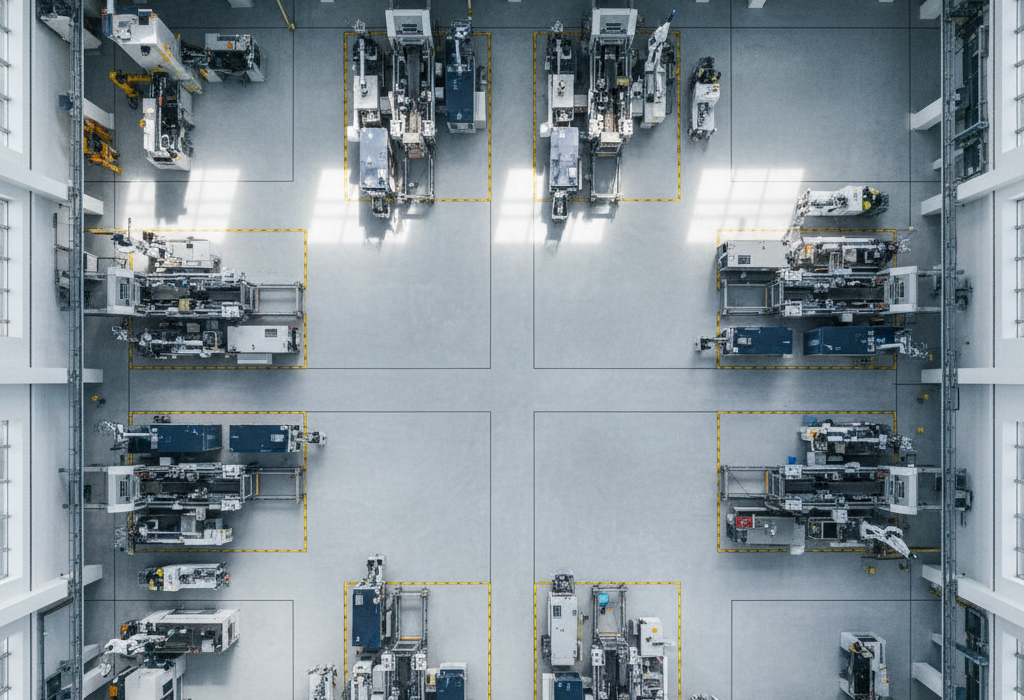
Factory Vaastu Checklist: Boost Safety and Profit in 2026
Vaastu checklist for factory space refers to a structured, room-by-room and zone-by-zone evaluation that aligns industrial layout, utilities, materials, and workflow with classical Vaastu principles. For factories near 33 Seachart Pl, Brampton, this guide shows how World Astro integrates Vaastu, Muhurat, and practical remedies to improve safety, throughput, and morale in 2026.
By Nirwair (World Astro) — Last updated: 2026-06-04
Overview and contents
This complete guide explains how to apply a factory Vaastu checklist across site selection, layout, utilities, machinery, safety, storage, and inauguration Muhurat. You’ll learn what Vaastu is, why it matters to industrial outcomes, and how World Astro’s on-site and remote consultations turn principles into measurable, shop-floor improvements.
Running a factory means balancing uptime, safety, and quality. The right Vaastu checklist links each choice—gate position, crane path, raw material flow—to energy-friendly directions and elements.
- What factory Vaastu is and how it works in practice
- Why Vaastu-aligned layouts improve safety and productivity
- Step-by-step checklist for siting, planning, and equipment
- Direction-wise zones: raw, process, QA, dispatch, admin
- Utilities, air, drainage, lighting, and noise placement
- Muhurat for new factory inauguration and expansions
- Tools and resources, including World Astro’s free Vaastu Energy Score
- Real case snapshots from Brampton and the Regional Municipality of Peel
What is factory Vaastu?
Factory Vaastu is the application of classical Vaastu Shastra principles to industrial sites. It maps functions—like receiving, production, utilities, and dispatch—to energy-supportive directions and elements, then adjusts layout, doors, slopes, and machinery to reduce resistance, accidents, and delays while improving flow.
In World Astro’s practice, Vaastu is integrated—not superstitious. We align entry, slope, storage, heat, water, and movement to their most favorable quadrants, then layer practical fixes: aisle widths, lighting levels, and airflow paths. This reduces friction points that otherwise become chronic safety or quality issues.
- Core idea: Match activity to supportive direction/element (e.g., fire-intensive work favors southeast).
- Scope: Site shape and slope; building footprint; circulation; utilities; equipment; safety systems.
- Method: Compass reading, sun path study, zone mapping, and corrective remedies where needed.
- Deliverables: A prioritized checklist with layout tweaks, remedies, and a phased action plan.
For clients handling metals, food, packaging, or logistics, this approach often unlocks smoother shift transitions, fewer rework loops, and calmer, safer floors.
Why factory Vaastu matters in 2026
Factory Vaastu matters because layout misalignments compound into bottlenecks, higher incident risk, and morale drag. Aligning flow, heat, water, and movement with favorable zones reduces interruptions, supports quality, and stabilizes schedules—key advantages as labor markets and supply chains stay tight in 2026.
Here’s the thing: even small misplacements—like a boiler in the northeast or a sump in the southeast—echo across daily operations. When we correct the placement (or apply remedies), near-misses drop, and supervisors report steadier cycles.
- Safety first: Heat and fire in southeast; heavy utility blocks in southwest; water treatment in northeast minimizes cross-influence.
- Predictable flow: Raw in northwest to move toward southeast processing, then southwest finished goods stability, and west/northwest dispatch.
- Fewer hot/cold spots: Air and light coordinated with work intensity help maintain consistent conditions shift-to-shift.
- Team confidence: Clear directional logic reduces decision fatigue and makes training easier.
We’ve found that, once the floor honors directional logic, housekeeping, 5S routines, and preventive maintenance stick better because the environment supports discipline rather than fighting it.
How factory Vaastu works (step-by-step)
Factory Vaastu works by surveying direction and elements, mapping each function to a favorable zone, then sequencing flow from receipt to dispatch with minimal crossings. The consultant documents gaps, proposes remedies, and phases changes so production continues without disruption.
Our consulting flow is practical and transparent. We combine compass readings with your process map, utilities, and hazard registers, then align the factory to supportive zones and realistic remedies.
- Discovery — Current layout, product mix, shift patterns, and constraints.
- Compass & sun path — Establish north, daylight windows, heat load, and shadows.
- Zone mapping — Mark NE, SE, SW, NW; overlay functions and material flows.
- Gap analysis — Identify mismatches (e.g., heat in NE) and crossing flows.
- Action plan — Prioritize moves, add remedies (yantras, colors, partitions), and sequence work.
- Training — Brief supervisors on new logic; update SOPs and 5S visuals.
- Follow-up — Validate performance, near-misses, and operator feedback after 30–90 days.
For remote sites, we use floor plans and videos; for GTA facilities, on-site surveys from Brampton are common. For complex inaugurations or line starts, we also recommend Muhurat selection to time critical first runs.
Vaastu checklist for factory space: the core areas
Use this factory Vaastu checklist to align site, building, flow, utilities, and safety. Prioritize gates and slope, confirm zone-to-function mapping, place heat and water correctly, route clear aisles, and assign storage logically. Add remedies where moves aren’t feasible to stabilize operations.
Site and footprint
- Plot shape: Prefer regular rectangles/squares; avoid extreme cutouts. Consolidate jagged edges with landscaping or auxiliary sheds.
- Entrance gate: Favor east or north. Keep immediate internal turn radii safe and uncluttered for trucks and forklifts.
- Site slope: Gentle slope toward north or east helps water exit without pooling. Divert aggressive south/west slopes with drains and berms.
- Setbacks & greens: Soften harsh corners with greenery and ensure perimeter drainage avoids the southeast and southwest blocks.
Zone-to-function mapping
- Northeast (NE): Water, labs, quality inspection, cleanliness stations, and temple/meditation niche.
- Southeast (SE): Heat and fire—boilers, furnaces, ovens, welding bays, and curing rooms.
- Southwest (SW): Heavy, stable blocks—transformers, compressors, dies, finished goods buffer, senior offices.
- Northwest (NW): Movement zones—raw material receiving, light storage, and dispatch staging.
- Center (Brahmasthan): Keep open; avoid pillars, pits, or heavy mezzanines.
Flow and circulation
- One-way logic: NW receiving → SE processing → SW finished → W/NW dispatch. Limit backtracking with U-shaped or straight-through cells.
- Aisle widths: Mark main aisles wide enough for two-way forklifts; keep cross-aisles consistent and free from pallet creep.
- Crane and forklift paths: Separate pedestrian walkways with guardrails; avoid cutting across the center area.
Utilities and services
- Power house: SW or south along the boundary; keep HT rooms stable and well-ventilated.
- Water treatment: NE or north. Keep chemical stores ventilated and separated from heat zones.
- Compressed air: SW block for compressors; route mains to minimize pressure drops.
- Restrooms and locker rooms: West or northwest; keep them out of NE and center.
Safety and environment
- Emergency egress: Doors open out; clearly lit routes that don’t crisscross critical process cells.
- Ventilation: Cross-vent in hot zones; use roof vents near SE heat clusters.
- Drainage: Pull fluids toward NE/N so water features don’t aggravate the SE fire zone.
- Lighting: Use bright, uniform light over inspection and assembly; leverage natural light on north/east sides.
Storage and inventory
- Raw materials: NW light/medium racks; FIFO lanes aligned with dispatch logic.
- Flammables: Store near SE in certified cabinets, away from NE.
- Finished goods: SW buffer helps stability, with controlled dispatch to W/NW.
- Spare parts: SW or south; index critical spares near maintenance bays.
People and offices
- Admin and finance: SW/S enhances stability in decisions and record-keeping.
- Production control: West or south with line-of-sight to shop floor.
- Training and prayer space: NE corner room or niche for short mindfulness breaks.
Directional zones with practical factory examples
Assign heat to southeast, heavy/stable blocks to southwest, water/cleanliness to northeast, and movement to northwest. Keep the center free. This simple mapping prevents cross-influence: water calms NE, fire energizes SE, SW anchors weight, and NW supports motion—ideal for clear, one-way material flow.
Below is a quick mapping table you can share with supervisors.
| Zone | Primary Element | Best-Fit Factory Functions | Example Placements | If Move Isn’t Possible |
|---|---|---|---|---|
| Northeast (NE) | Water | QA, labs, wash areas, ETP/RO, prayer | Lab benches, eyewash, sample racks | Add water feature or calming colors; keep heat out |
| Southeast (SE) | Fire | Boilers, ovens, welding, curing | Furnace bay, kiln, paint baking | Fire remedies, thermal screens, route exhaust vertically |
| Southwest (SW) | Earth | Transformers, compressors, finished goods | Power room, heavy spares, QA release buffer | Weight-adding remedies, anchored racking, dense storage |
| Northwest (NW) | Air | Receiving, staging, dispatch | Inbound lanes, dock staging, courier pickup | Wind chimes/airflow cues; keep lanes fluid |
| Center (Brahmasthan) | Space | Open circulation | Clear aisle cross, skylight | Open-grid mezzanines or transparent partitions only |
If you’re uncertain about an area, try our Vaastu Energy Score to pre-screen strengths and gaps before a full survey.
Best practices, specs, and micro-remedies
Prioritize correct placement first, then add micro-remedies when moves are impractical. Combine Vaastu alignment with simple specifications—clear aisles, balanced lighting, adequate airflow, and stable power blocks—to create calm, productive floors that hold improvements over time.
In our experience, the fastest gains come from clarifying flow and removing cross-influences. Here are practical specifications you can apply this week.
Quick-spec checklist
- Aisles and turns: Standardize widths and turning radii so forklifts don’t clip racks; mark “no pallet creep” zones near corners.
- Lighting balance: Use brighter light over inspection and assembly; diffuse glare in polished-metal zones.
- Heat extraction: Extract vertically from SE heat sources; don’t pull hot air across NE areas.
- Water routing: Route drains to N/NE sumps; avoid standing water in SE or center.
- Noise pockets: Move compressors toward SW; isolate with baffles, not the center bay.
- Entry logic: Favor east/north personnel entries; avoid routing foot traffic through SW blocks.
- Visual controls: Place status boards on west/south walls to reduce glare and distractions.
Corrective remedies when you cannot shift equipment
- Directional cues: Mirrors and color bands guiding NW→SE flow help operators “feel” the route.
- Elemental balance: Where water lands in SE, add fire-calming measures and reroute routine washing to NE corners.
- Yantras and mantras: In high-stress cells, we sometimes recommend specific yantras or short mantras to anchor teams—practical, low-effort supports alongside layout fixes.
- Gemstone/Rudraksha: For key decision-makers or supervisors experiencing persistent agitation, targeted gemstone or Rudraksha guidance can steady critical shifts.
For a deeper walkthrough of sequencing and pitfalls, see our Vaastu consultation process and how we avoid common correction mistakes.
Tools and resources for factory Vaastu
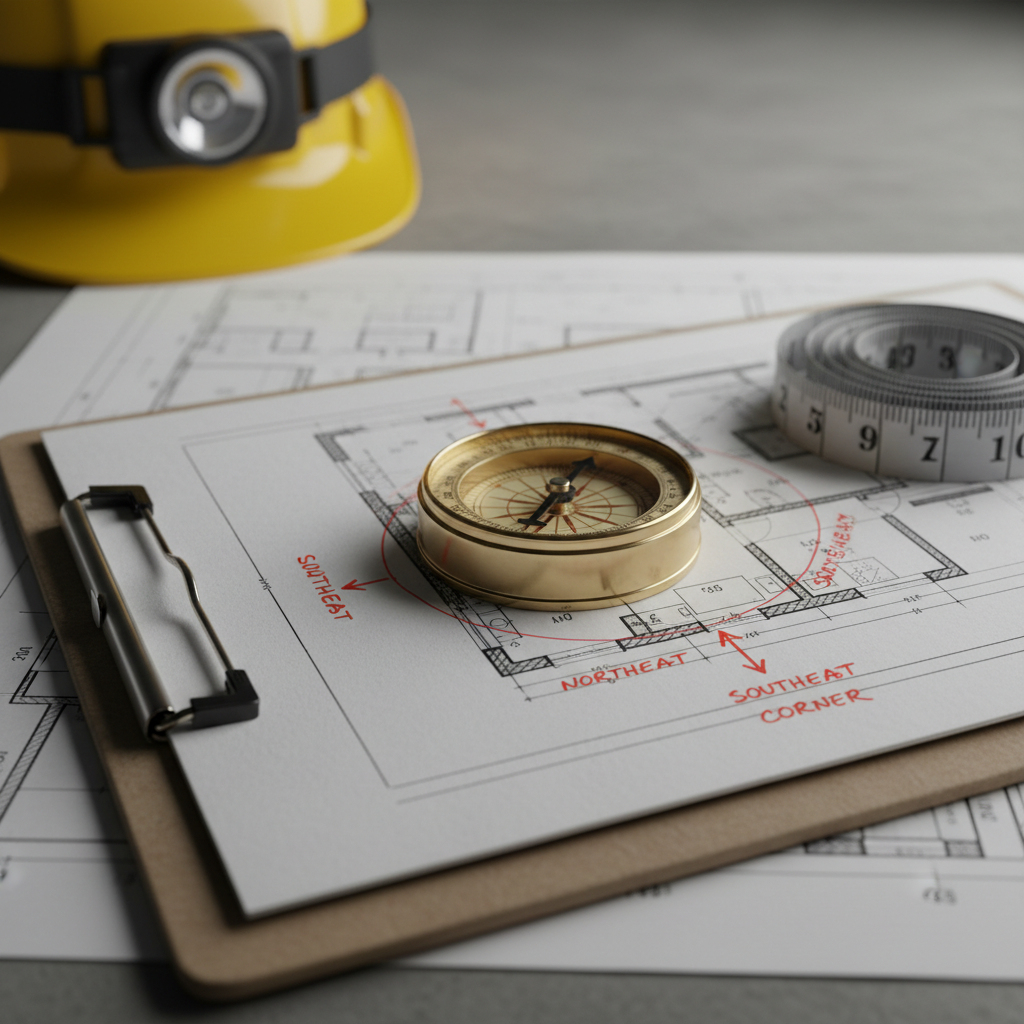
Use a reliable compass, sun path app, annotated floor plans, and a Vaastu zone template. Pair these with an energy precheck (our free Vaastu Energy Score), then schedule an on-site or remote consultation to convert observations into a prioritized action plan.
Factories that prepare data up front accelerate results. Here’s what to gather and use.
Measurement and planning tools
- Compass and sun tracker: Confirm north, sunrise angle, and seasonal shift for skylights and vents.
- Annotated layout: Mark gates, utilities, drains, heat points, and pedestrian paths.
- Zone overlay: Apply NE/SE/SW/NW grid to each bay; flag conflicts for action.
- Risk registers: Note near-misses, hot/cold spots, and defect origins to target fixes.
Digital and diagnostic aids
- Vaastu Energy Score: Start with the free score tool to visualize current strengths.
- Photo/video sweep: Short clips of flow changes across a shift reveal hidden crossings.
- Simple sensors: Temperature and airflow loggers near SE heat and NE clean zones help tune ventilation.
Consultation and training
- On-site survey: From Brampton, we visit factories across the GTA to validate directions and map practical changes.
- Remote review: For regional sites, send drawings and clips; we’ll annotate and return a phased plan.
- Supervisor briefings: We create zone posters and short huddles so teams adopt the new logic quickly.
If you’re new to all this, our guide to Vaastu experts in commercial spaces explains how to scope work without halting production.
Site selection, expansion, and renovations
Pick regular plots with favorable entry (east/north) and manageable slope (toward north/east). For expansions, extend the same zone logic. During renovations, protect the center area, sequence moves to avoid flow crossings, and keep heat away from the northeast in all temporary setups.
Choosing a site or adding bays? Start with the macro picture—shape, entry, slope—and then plan gates and docks that enable the NW→SE→SW→W flow.
- Greenfield: Plan docks on the west/north sides; keep the center of the main bay open.
- Brownfield: Correct gates if possible; otherwise, add internal routing cues to protect zone logic.
- Renovations: Don’t stage hot work in NE; place temporary utilities in SW or south.
- Expansions: Mirror original zone logic; don’t push heavy utilities toward the center.
For timing critical milestones like groundbreakings or first-fire on furnaces, consider World Astro’s Muhurat selection as part of the factory plan.
How Muhurat supports factory startups
Muhurat aligns key events—like inaugurations, line starts, or power-ups—with favorable planetary periods. When paired with sound Vaastu, many teams report calmer first runs, fewer early defects, and smoother handovers between shifts during the critical ramp-up window.
We combine classical timing with practical readiness checks: inventory staged, SOPs confirmed, utilities stabilized. Teams appreciate the confidence that comes from starting at a time designed to support focus and flow.
- Good use cases: Opening ceremonies, first production lots, utility energization, and furnace light-up.
- Preparation: Dry runs before Muhurat ensure the time window goes to productive output, not last-minute fixes.
- Continuity: Follow-up prayers or brief meditations at shift starts can maintain steadier rhythm.
For a primer on how we time events, see our consultation overview linked earlier, or reach out to talk directly with Nirwair for context on your factory.
Case studies: Brampton and GTA factories
World Astro’s factory Vaastu engagements emphasize quick wins first—gates, heat/water, and flow—then deeper fine-tuning. The snapshots below show how simple realignments stabilized schedules, reduced rework, and improved supervisor confidence without halting production.
Packaging converter, Brampton
- Issue: Frequent rework near inspection because hot curing exhaust drifted through the area.
- Action: Shifted curing ovens deeper into SE cluster; added vertical exhaust; moved QA benches toward NE.
- Result: Inspectors reported steadier readings, fewer adhesive defects, and calmer airflow within two weeks.
Metal fabrication shop, Mississauga
- Issue: Near-misses at a center cross-aisle where forklifts and pedestrians crossed.
- Action: Re-routed the aisle outside the Brahmasthan; added barriers and marked a NW→SE material loop.
- Result: Operators described the floor as “simpler”; supervisors noted cleaner handoffs across shifts.
Food processing unit, Vaughan
- Issue: Water pooling in SE created dampness and machine downtime.
- Action: Re-graded drains to N/NE; moved routine wash to NE bay; isolated heat in SE.
- Result: Fewer humidity alarms and better uptime in hot months.
3PL warehouse, Brampton
- Issue: Dispatch staging blocked inbound during the evening rush.
- Action: Moved staging to W/NW; trimmed buffer in SW; added color-coded lanes for couriers.
- Result: Dock congestion eased; drivers completed loops faster with fewer backtracks.
If you’re addressing deeper Vaastu imbalances, our note on common dosh-correction mistakes explains how we keep remedies practical and ethical.
Factory Vaastu FAQ
These concise answers address common factory Vaastu questions: how long a survey takes, what to prepare, what if you can’t move equipment, and how Muhurat ties into line startups. Each answer focuses on action you can take immediately.
How long does a factory Vaastu survey usually take?
A typical small-to-mid factory takes one working day on-site plus a few days for documentation. Large, multi-bay plants or complex utilities may require staged visits. Remote reviews based on detailed drawings and videos are also available when on-site scheduling is tight.
What if we can’t relocate heavy machines?
Prioritize the most disruptive conflicts first, then apply micro-remedies: re-route flow, add thermal screens or partitions, adjust ventilation, and use directional cues. Where appropriate, we may also recommend yantras or short mantras to help teams stabilize stressful cells.
Does Vaastu conflict with building codes or safety rules?
No. We design Vaastu alignment to complement—not override—safety codes and good engineering. Clear egress, ventilation, fire separation, and electrical safety remain non-negotiable, and Vaastu helps reduce cross-influences that complicate day-to-day compliance.
How does Muhurat help with inaugurations or line starts?
Timing key milestones with a favorable Muhurat supports focus and team confidence. We pair timing with practical readiness—tools, materials, SOPs—so the window is used for productive output, not last-minute fixes. Many teams find ramp-up smoother as a result.
Summary and next steps
Start by confirming directions and mapping functions to zones: NE for water/clean, SE for heat, SW for heavy/stable, NW for movement, and keep the center open. Then refine aisles, lighting, ventilation, and storage. When moves aren’t feasible, apply practical micro-remedies and supportive rituals.
Key steps to take this week:
- Mark NE/SE/SW/NW on your current floor plan and flag conflicts.
- Stabilize utilities in SW and water treatment in NE.
- Protect the center; re-route any cross-aisles running through it.
- Cluster heat in SE and remove drains from SE and center.
- Stage raw in NW, finished goods in SW, dispatch in W/NW.
Local considerations for Brampton
- Schedule deliveries to avoid The Gore Rd/Queen St peak windows and keep NW staging clear for smooth inbound flow.
- Winter brings snowmelt and slush—reinforce N/NE drainage and vestibules so water doesn’t creep toward SE heat clusters.
- For team morale, short mindfulness breaks in a quiet NE niche help; some clients situate this near the Bhavani Shankar Mandir & Cultural Centre side of the campus for easy access after shifts.
Get a practical, phased Vaastu plan
If your factory needs change without disruption, World Astro builds phased Vaastu action plans—what to move now, what to remedy, and how to brief teams. On-site visits across the GTA and remote reviews are available, led by Nirwair with 15+ years of Vaastu experience.
Ready to stabilize flow and reduce daily friction? Start with the Vaastu Energy Score, or book a consultation from Brampton. We’ll map zones, sequence steps, and time key startups with supportive Muhurat when needed.
Evidence and citations
While factory Vaastu is a traditional framework, many layout choices also echo mainstream planning logic: separate heat and water, protect central circulation, and keep heavy utilities anchored. The resources below explain foundational Vaastu concepts in accessible language.
For general background on home-oriented Vaastu concepts that translate to industrial planning, see this overview on Vaastu basics, a layout-focused explainer, and common mistakes to avoid. We adapt these principles to factories through zone mapping, flow logic, and safety-first specifications.
Key takeaways
Anchor heavy utilities in the southwest, cluster heat in the southeast, keep water and cleanliness in the northeast, and stage movement in the northwest. Protect the center. When equipment can’t move, use micro-remedies and clear visual flow cues to maintain stability without downtime.
- Zone logic prevents cross-influence and clarifies daily decisions.
- Simple specs—aisles, lighting, ventilation—compound results.
- Muhurat adds a confidence boost to critical first runs.
- Start with a precheck via the Vaastu Energy Score, then plan changes.