




Which Lucky Stone Fits You Best? Simple Guide in 2026
What affects lucky gemstone choice is your natal chart, current planetary periods, and practical fit for daily wear. From our World Astro office at 33 Seachart Pl in Brampton, we match stones to your Lagna, Moon sign, and Mahadasha, then confirm durability, allergies, and lifestyle so the gem actually helps you.
By Nirwair — World Astro
Last updated: 2026-06-12
Overview and Quick Summary
A lucky stone works when it aligns with your birth chart and daily life. We evaluate your ascendant, Moon sign, planetary periods, and house strengths, then confirm gem authenticity, quality, metal, finger, and wearing routine. The result: a safe, practical gemstone that supports your real goals.
You want a clear, safe path to the right stone. Here’s how we’ll help you scan and act fast.
- Understand what affects lucky gemstone choice in plain English.
- See how Vedic astrology factors map to a real gem and metal.
- Learn wear rules: day, finger, mantra, purification, and checks.
- Use a simple step-by-step to avoid common mistakes.
- Access World Astro tools for charts, Vaastu energy, and follow-up.
Want personal guidance? Our lucky gemstone recommendation session pairs your goals with a stone and a wear plan you can live with.
What affects lucky gemstone choice?
The main factors are your ascendant, Moon sign, and current planetary periods (Mahadasha/Antardasha), supported by house strengths, yogas, and transits. We only recommend a stone if the planet is functionally benefic, unafflicted, and aligned with your goal—then confirm durability, comfort, and authenticity.
Before you buy anything, anchor the choice in your chart. In Vedic practice, gems strengthen specific planetary energies. That’s why a one-size-fits-all birthstone list rarely delivers consistent results.
Core astrological signals
- Lagna (Ascendant) and lord: Sets your baseline suitability for a planet’s gem. Example: For Taurus ascendant, Venus is a key benefic; diamonds or high-grade white sapphires often align.
- Moon sign and condition: Mood, stability, and receptivity. A strong Moon makes pearl or moonstone practical; a weak or afflicted Moon calls for caution.
- Mahadasha/Antardasha: Timelines matter. A Sun Mahadasha may validate ruby; a Saturn period might favor blue sapphire—if Saturn is functionally benefic.
- House results and yogas: We look for real-life outcomes—career (10th), wealth (2nd/11th), education (5th), relationships (7th). Gems should amplify houses you want to grow, not stir dormant conflicts.
- Transits and gochara: Short-term boosts or frictions. We never let a brief transit override long-term chart logic.
SCU: A gem is helpful only when it strengthens a planet that’s already capable of giving good results in your chart. The clean test: Is the planet benefic for your ascendant, dignified or supported, and relevant to your goal? If yes—and you can wear it safely—it’s a candidate.
For deeper context, see how we connect charts to decisions in our birth chart analysis guide.
Why lucky stones matter for results
A well-chosen gemstone nudges probabilities your way by reinforcing a planet that already favors you. The outcome is practical: steadier focus, fewer setbacks, and better timing. Poorly chosen stones can agitate issues or feel uncomfortable—so selection discipline really matters.
You’re not chasing magic; you’re stacking small advantages in your favor. Here’s why it’s worth doing right:
- Results track your goals: Career growth? Fortify 10th/11th lords. Relationship harmony? Support Moon/Venus and the 7th house.
- Consistency beats hype: Reproducible routines—right day, finger, metal, and mantra—outperform sporadic wearing.
- Risk control: Avoid stimulating malefic tendencies. For many ascendants, gemstones for Mars, Saturn, or Rahu require extra caution.
- Real-world fit: Desk work vs. field work, gloves vs. open hands—daily context affects stone setting and durability.
SCU: Lucky stones matter because they operationalize your chart into daily habits. When the planet supported is functionally benefic and the routine is sustainable, you see fewer obstacles and more momentum toward the specific outcomes you asked for.
If you’re new to structured decision-making, our astrology consultation framework shows how we translate charts into action plans.
How astrologers choose a stone (World Astro method)
We validate benefic planets, match goals to houses, shortlist 1–2 stones, and confirm comfort and safety. Then we set the metal and finger, prescribe a wearing day and mantra, and schedule a check-in after 21–45 days to evaluate tangible shifts.
Step-by-step process
- Clarify goals: Career, relationships, education, or stability.
- Read the chart: Lagna, Moon, house lords, yogas, Mahadasha/Antardasha.
- Risk screen: Exclude stones for planets that are malefic or heavily afflicted.
- Shortlist stones: Example: Venus strong → diamond or white sapphire; Jupiter strong → yellow sapphire.
- Practical fit: Allergies, work environment, ring vs. pendant, bezel vs. prong setting.
- Protocol: Metal, finger, weekday, mantra, cleansing method, and wear schedule.
- Follow-up: Journal objective signs—sleep, mood, clarity, leads, interviews, or smoother teamwork.
Quality checks that matter
- Durability: On the Mohs scale, sapphire and ruby are rated 9, suited to daily rings; pearl is delicate and often better as a pendant.
- Authenticity: Ask for treatment disclosure (e.g., glass-filled rubies), request a reliable lab certificate, and examine clarity with a loupe.
- Comfort and safety: Nickel sensitivities are common; pick metals accordingly (often gold for traditional wear).
- Maintenance: Soft stones pick scratches; prongs can snag; bezels are safer for active hands.
SCU: Our method prioritizes planetary beneficence first, then user safety and sustainability. A stone you can wear comfortably, every week, following a clear protocol, will out-perform a theoretically “perfect” gem that lives in a drawer.
Preparing for a consult? Here are good questions to ask so we can map gems to outcomes faster.
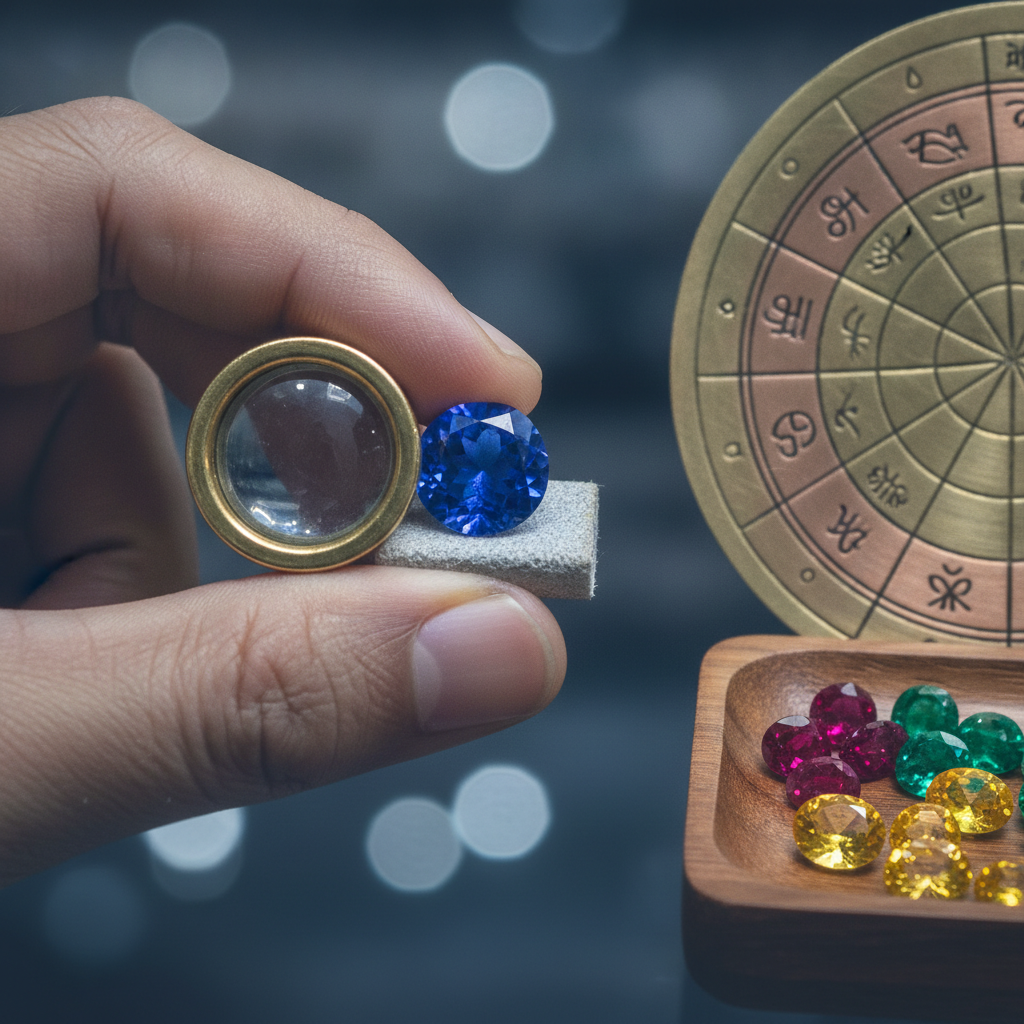
Types and methods of gem selection
Astrology decides whether to wear a stone; gemology decides which specimen is safe and durable. Choose between natural, treated, or lab-grown based on disclosure, stability, and budget preferences. Prioritize clarity and cut that preserve durability for real-world wear.
Natural vs. treated vs. lab-grown
| Type | What it means | Pros | Considerations |
|---|---|---|---|
| Natural | Mined, may have minor treatments | Traditional appeal; unique inclusions | Verify treatments; ask for lab reports |
| Treated | Enhanced (e.g., heat for sapphire) | Improved color/clarity; accessible | Some treatments lower stability (e.g., glass-filled) |
| Lab-grown | Created in controlled conditions | Fewer inclusions; predictable quality | Ensure full disclosure; choose durable cuts |
Cut, color, and clarity—practical notes
- Cut and setting: Shallow cuts chip; sharp corners snag. Rounded cushions in bezels survive daily bumps.
- Color: For astrology, we prioritize purity of hue and saturation over fancy shapes.
- Clarity: Inclusions near edges weaken a stone; pick eye-clean where feasible.
SCU: Your best gem is the one you can safely wear as prescribed. Whether natural, treated, or lab-grown, insist on transparent disclosure and physical stability. The right stone with the wrong cut or fragile setting won’t deliver consistent results.
For a jewelry-side perspective on quality factors, see this overview of the 4Cs fundamentals.
Best practices for wearing and caring
Follow a simple routine: wear on the right day and finger, in the recommended metal, after cleansing and mantra. Track effects weekly for 4–6 weeks, then adjust. Store safely and service settings to avoid chips or loss.
Wearing protocol (typical examples)
- Day and hour: Align with the planet’s weekday (e.g., Thursday for Jupiter).
- Finger and metal: Example pairings—yellow sapphire in gold on index; diamond/white sapphire in gold on middle or ring finger per chart.
- Purification: Brief rinse and a simple prayer/mantra consistent with your tradition.
- Start slow: Wear a few hours, then half-days; build to full routine based on comfort.
Maintenance
- Cleaning: Mild soap and soft brush; avoid ultrasonic cleaners for soft/treated stones.
- Setting checks: Prongs loosen over time; inspect monthly if you’re active.
- Storage: Separate pouches; harder stones can scratch softer ones.
SCU: Rituals matter because consistency matters. A light, repeatable protocol builds the habit that lets the stone do its quiet work. Keep it simple, safe, and sustainable—then evaluate with a short journal log.
For wear instructions by gem type, browse our Gems & Rudraksha guidance.
Tools and resources you can use
Start with your accurate birth details, then use guided tools to orient decisions. A 1:1 consult converts findings into a wear plan. Keep one simple tracker to capture outcomes and decide whether to continue, switch, or pause.
- Talk to an expert: Prepare with these consultation tips and bring your priorities.
- Goal-first worksheet: Define one or two measurable outcomes you care about (e.g., pass an exam, stabilize sleep).
- Birth chart orientation: Our decision guide explains what we read and why it matters.
- Gem knowledge: For consumer-facing summaries, this gemstone guide outlines common varieties and care basics.
Local considerations for Brampton
- Book appointments that avoid evening rush near Highway 50 – Zum Queen Station Stop WB to arrive on time and relaxed.
- Winter gloves can loosen ring prongs over months; schedule a quick spring setting check if you wear stones daily.
- If you meditate at home or visit Bhavani Shankar Mandir, align your mantra practice with your weekday wear plan for steadier results.
Prefer a light intro? Our short read on how we match lucky gems shows the service flow end-to-end.
Case studies and examples (Brampton • Regional Municipality of Peel)
Real results come from precise charts and practical routines. These Brampton examples show how a disciplined selection—with follow-up—translated into calmer schedules, clearer focus, or steadier relationship dynamics over four to eight weeks.
Career and focus
- Scenario: Brampton client, Taurus ascendant, strong Venus period; seeking creative role clarity.
- Action: White sapphire in gold, right-hand middle finger; Friday start; weekly journaling.
- Outcome (6 weeks): Fewer conflicting commitments, one strong interview, and improved design output notes.
Emotional steadiness
- Scenario: Cancer Moon with fluctuating sleep quality; home felt unsettled.
- Action: Pearl pendant (safer than ring); Monday mantra routine plus basic Vaastu decluttering.
- Outcome (5 weeks): More stable bedtime routine and calmer mornings logged in tracker.
Relationship harmony
- Scenario: Libra rising couple planning a civil ceremony; wanted smoother communication.
- Action: Venus support via diamond band; Friday wear; gentle mantra; check-in after 30 days.
- Outcome (8 weeks): Fewer tense exchanges and clearer division of household tasks.
SCU: These aren’t miracles; they’re practical routines aligned to strong chart factors. When a gem choice is anchored in timing, house results, and wear discipline, small compounding gains show up in ordinary life logs—sleep, tasks, and teamwork.
For more structure around life planning, see our consultation framework.
Common mistakes and how to avoid them
Don’t copy generic birthstone lists, ignore Mahadasha timing, or wear stones for planets that are malefic for your ascendant. Validate with a chart reading, confirm durability, and test comfort gradually before committing.
- Copy-paste picks: Month birthstones are cultural, not personal strategy.
- Ignoring timing: Wearing a stone against your current planetary period can feel “off.”
- Overlooking safety: Glass-filled rubies or very soft stones chip fast in rings.
- No protocol: Skipping weekday/finger/mantra removes the consistency that drives results.
SCU: The safest path is simple—chart first, protocol second, gradual wear third. If any step feels wrong (comfort, mood, or snag risks), pause and reassess before daily use.
Curious where to begin? Read our quick explainer on how we select lucky gems and bring your questions.
How this connects to Vaastu at home or work
Gemstones help at the individual level; Vaastu shapes the space you live and work in. Combining both gives you aligned personal energy and supportive surroundings for steadier gains.
- Complementary focus: Gems reinforce a planet for you; Vaastu optimizes the property’s energy flow.
- Practical synergy: A light morning mantra by your northeast window can improve consistency.
- When to escalate: If progress stalls, consider a Vaastu walkthrough to remove environmental friction.
SCU: Personal remedies and spatial remedies work best together. If your chart supports Jupiter but your study corner is cluttered and dark, tidy changes plus a yellow sapphire routine typically feel better than either step alone.
To gauge your space quickly, try our free Vaastu tools on the site and the guidance in our pillar post on Vaastu dosh signs (also discussed in our consultations).
Checklist and decision flow
Use a short, repeatable checklist: goal → chart validation → shortlist → safety check → wear protocol → 30-day review. If results track, continue; if not, adjust or pause with your astrologer.
- Define one goal: What single change will signal “this helps”?
- Validate benefics: Ascendant logic, house results, current periods.
- Shortlist 1–2 stones: Choose durable cuts you can wear.
- Safety screen: Metal sensitivities, setting strength, treatment disclosure.
- Protocol: Weekday, finger, mantra, and a simple journal.
- Review: 21–45 day check for concrete life markers.
SCU: A decision flow keeps emotion out and lets data in. When your outcome defines success and the routine is livable, gemstone work stays grounded and useful.
For a plain-language buyer overview on stones and care, this consumer jewelry guide can help you ask better questions.
Frequently Asked Questions
These short answers address what most clients ask before choosing a lucky stone. They focus on safety, timing, authenticity, and how fast you might notice practical changes.
How fast will I notice results after wearing a gemstone?
Most clients track subtle shifts within 2–4 weeks, with clearer patterns by 6–8 weeks. We recommend journaling weekly markers like sleep quality, focus, or reduced friction at work. If nothing changes after a month, review fit and timing with your astrologer.
Can I wear more than one lucky stone at once?
Yes, but sequence matters. Introduce one stone, observe for a month, then consider a second if your chart supports it. Wearing multiple gems without timing discipline can blur cause and effect and sometimes create discomfort.
Do lab-grown stones work for astrology?
Astrology focuses on planetary correspondence, not origin. The key is purity of color, stability, and your ability to wear it consistently. If the chart logic is sound and the stone is durable and comfortable, lab-grown options can fit your plan.
What if I feel restless after putting on a stone?
Stop wearing it and check your chart fit. Restlessness can signal that the planet is not benefic for your ascendant or that timing is off. Resume only after adjusting the protocol or changing the stone with professional guidance.
Is the month birthstone list enough to choose my gem?
No. Month lists are cultural and not tailored to your chart. For reliable outcomes, validate with your ascendant, Moon sign, and current planetary periods, then confirm safety, comfort, and a routine you can actually keep.
Conclusion: Key takeaways and next steps
Choose a gemstone by chart logic first, then confirm safety and comfort. Wear with a simple protocol and review after a month. If results track your goal, continue; if not, refine with your astrologer. Simple, disciplined steps beat guesswork.
- Chart-first: Benefic planets and relevant houses guide the pick.
- Safety-first: Durable cuts, clear disclosure, and comfortable metals.
- Routine-first: Right day, finger, mantra, and a weekly tracker.
- Review-first: 21–45 day check to confirm direction.
Ready to personalize this? Start with our streamlined lucky gemstone recommendation, or prep with these talk-to-astrologer tips. If you’re near Brampton, we can coordinate a time that fits your schedule.
Soft CTA: Want a clear, chart-backed plan? Book a one-on-one where we map your goal to a gem, metal, finger, and routine you can actually follow—without guesswork.
Related topics and services
Build momentum by pairing gemstone work with the right questions, chart orientation, and care instructions. These resources help you choose confidently and keep progress steady without overcomplicating the process.
- Overview of our lucky gem matching service.
- Read how chart analysis supports decisions you care about.
- Prepare with smart questions to ask an astrologer.
- Practice wear routines from our Gems & Rudraksha instructions.
- When you’re deciding, consider an astrology consultation to align timing and goals.